
Last updated November 15, 2026
 Wrought iron
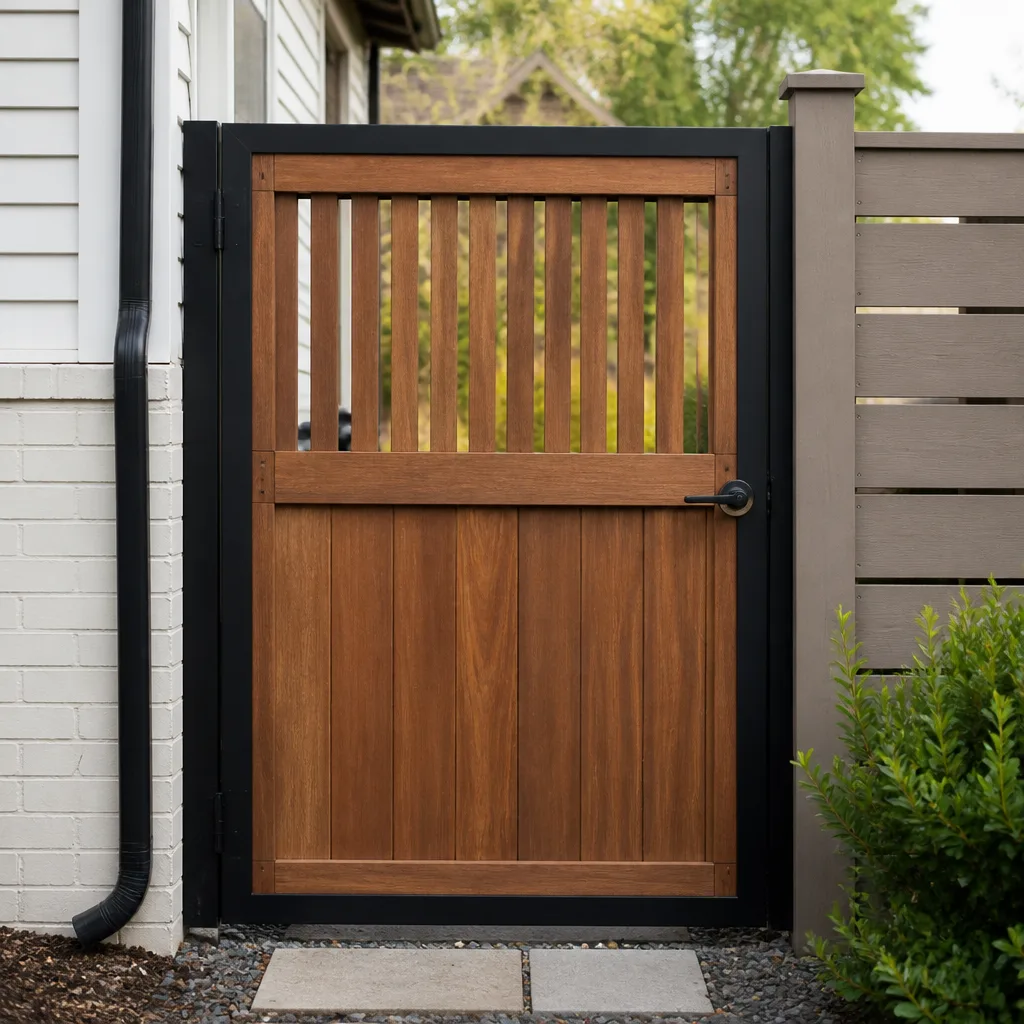 Wood & steel frame
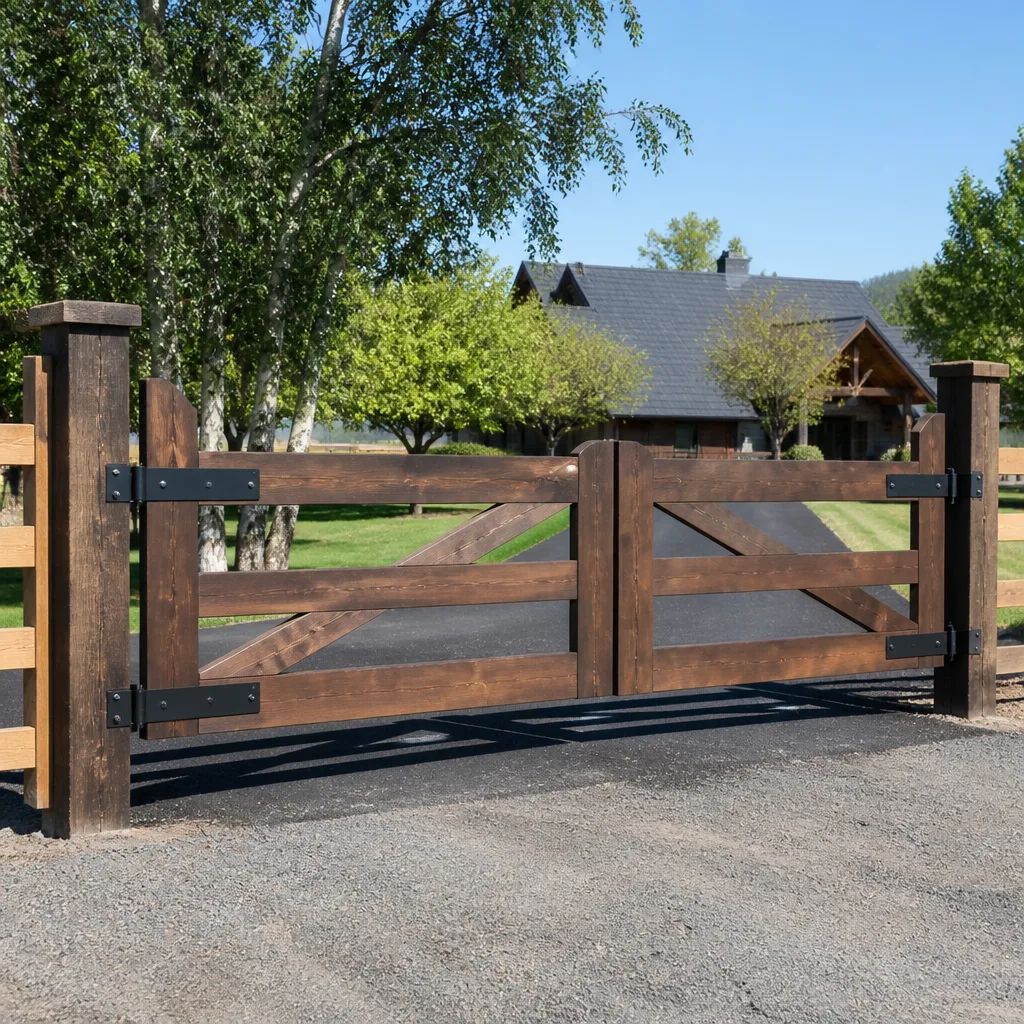 Farm & ranch
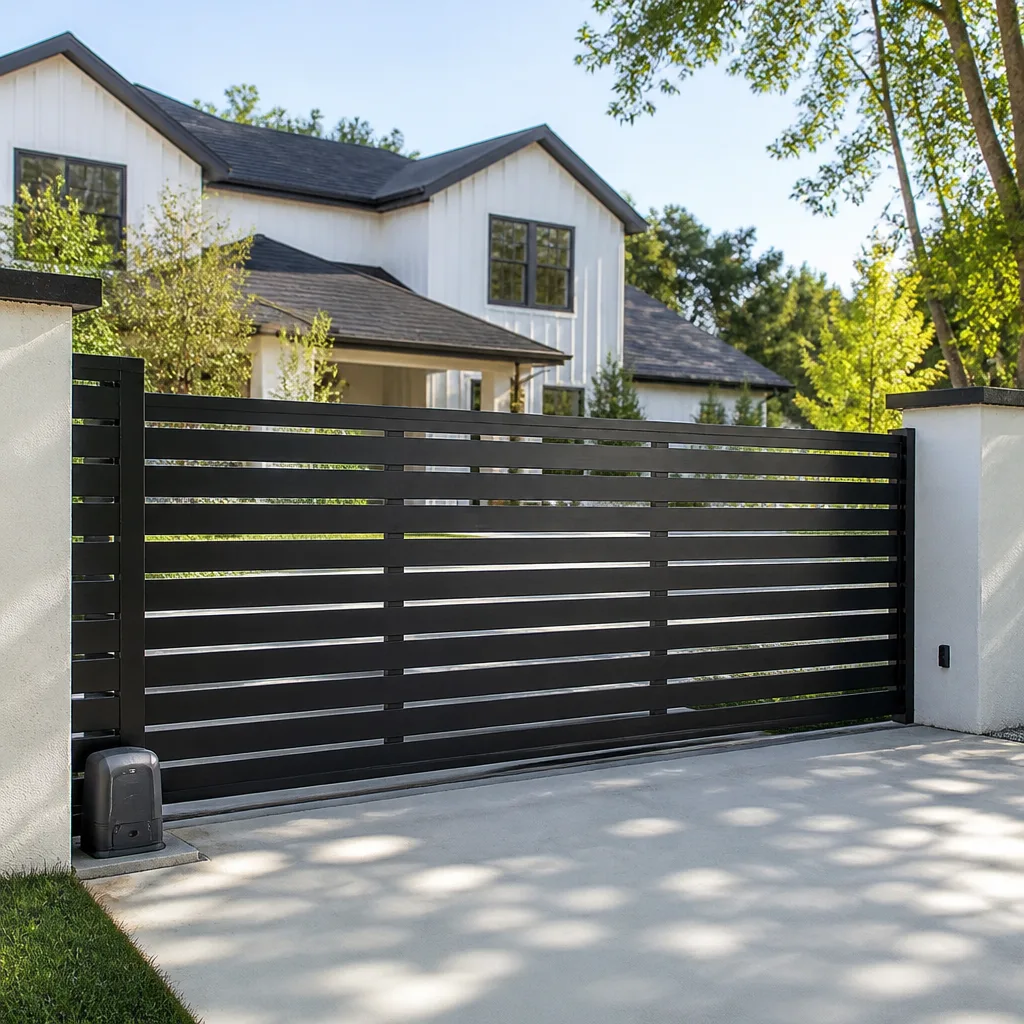 Sliding driveway gates
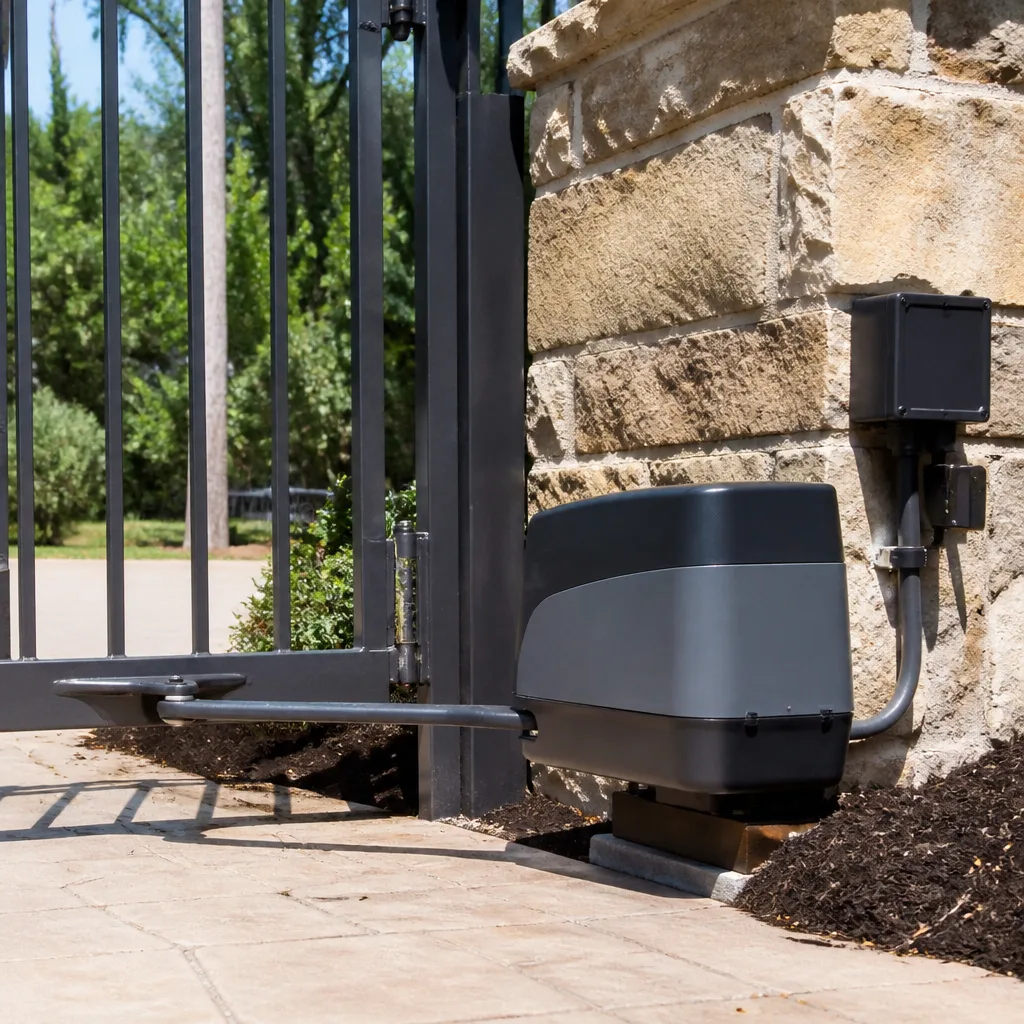 LiftMaster operators
Free on-site gate assessment - hinges, posts, and your LiftMaster or Nice gate operator checked before anything is quoted
The assessment is free and the quote is the invoice.
Get your free estimateSeasonal Gate Repair Care for Roseville: Year-Round Homeowner’s Guide
Roseville gets roughly 250 days of sun a year, and most gate operators were built for climates that get half that. The common assumption is that a gate fails because of a storm, a collision, or plain old age. In our experience around Roseville, the bigger culprit is heat: month after month of it, working on metal fasteners, rubber seals, plastic housings, and the small batteries that keep an automated gate running when the power drops. Winter rain matters too, but it rarely does the slow damage that a long, dry summer does. This guide walks through what each season throws at a gate system here, what to check and when, and which tasks homeowners most often skip. It’s written for anyone responsible for a driveway gate, an HOA entrance, or a commercial access gate in Roseville.
Quick Answer
Seasonal gate care in Roseville means front-loading the work before the heat arrives, not after. Test and replace battery backups in April or May before the first 100°F days, re-square aluminum frames and hinge alignment in late summer after months of sustained heat, clear acorn and leaf debris from ground-mounted operator tracks every fall, and test loop detectors in winter when occasional frost throws off their sensitivity. The single most-skipped task is the annual manual-release test, which every operator manual recommends and few homeowners perform.
Styles & brands we work with
- Wrought iron
- Wood & steel frame
- Farm & ranch
- Sliding driveway gates
- LiftMaster operators
Table of Contents
- Why Roseville’s Climate Is Harder on Gates Than You’d Think
- Spring Prep (March-May): Battery Backup and Pre-Summer Checks
- Late Summer: Heat, Frame Warping, and Hinge Alignment
- Fall Prep: Acorns, Leaves, and False-Obstacle Errors
- Winter Electrical: Frost, Loop Detectors, and Phantom Cycles
- The Annual Task Most Homeowners Skip: The Manual-Release Test
- What a Brand-Specific Diagnosis Actually Looks Like
- A Month-by-Month Seasonal Gate Care Calendar
Why Roseville’s Climate Is Harder on Gates Than You’d Think
The damage here isn’t dramatic. Roseville winters are mild, and there’s no deep freeze to crack concrete or bury a gate in snow. What we do have is a wide swing between January nights and August afternoons, and that swing is what fatigues gate hardware over time. Metal fasteners loosen gradually as components expand and contract at slightly different rates. Rubber weather seals and end stops harden and crack. Batteries that live inside an operator housing cook in the summer heat, because a dark metal or plastic enclosure in direct sun runs considerably hotter than the surrounding air temperature. None of this announces itself. A gate doesn’t fail the day the damage starts; it fails months later, usually at an inconvenient moment.
This is the core reason seasonal care matters more in Roseville than a simple “check it once a year” approach suggests. The right timing is to work ahead of the seasons that do the most harm: test the battery before the hot months, tighten alignment before the fall winds shift a loosened hinge, and clear the track before a wet leaf mat jams a sliding operator. For homeowners who’d rather have an experienced eye look at the whole system, our gate repair page covers what a full inspection involves.
If your gate is manual, some of what follows still applies. Heavy panels, exposed hinges, and gate posts all take the same seasonal abuse, and an annual inspection catches problems while they’re still small.
What Roseville Gates Actually Face
- Roughly 250 sunny days a year, which means operators and battery housings sit in direct heat for months
- Hot summer afternoons that push a sealed enclosure well above ambient temperature
- Occasional winter frost on exposed loop detectors and concrete-surfaced tracks
- Fall acorn and leaf debris collecting in ground-mounted sliding operator tracks
- Dry-season dust settling into hinge pins and track channels
Spring Prep (March-May): Battery Backup and Pre-Summer Checks
Spring is when the reliable work gets done, because it’s the last stretch before the heat really settles in. The single most important task in this window is testing your gate operator’s battery backup. A gate operator’s backup battery is there so the gate keeps working (or at least opens once safely) during a power failure. Most backup units are sealed lead-acid, and those are very sensitive to heat. Sustained high temperatures accelerate internal corrosion and reduce the battery’s capacity to hold a charge. Lithium backup units handle heat better, but they still have limits, and they degrade quietly. What neither type does is warn you gracefully: the first sign of a dead backup is often a gate that won’t move during an outage.
Here’s how we suggest you approach spring, whether or not you call anyone in.
- Test the battery backup under load. Trip the main power at the circuit and see whether the gate opens and closes on battery alone. If it stalls, moves sluggishly, or the operator beeps a warning, the battery needs attention.
- Note the battery type and age. Sealed lead-acid and lithium units age differently. Note the type so whoever services the gate can replace it like-for-like, or upgrade intentionally.
- Check the control board and receiver housing for dust or insect nest buildup. Spring is when small critters move into warm, dry enclosures.
- Lubricate hinges and moving parts lightly, per the manufacturer’s guidance. Over-greasing attracts grit, so lighter is better.
- Confirm the safety edges and reversing functions still work. A gate that fails to reverse on contact is a hazard, especially with kids or pets around.
Before the hot months arrive, our electric gate repair page covers what to expect if a test turns up a problem.
Late Summer: Heat, Frame Warping, and Hinge Alignment
By late summer, the cumulative heat takes a visible toll. Aluminum gate frames, common on lighter residential gates, expand slightly in sustained heat. That expansion, combined with the daily expansion-contraction cycle, shifts hinge bolt alignment over the season. You may notice a gate that drags slightly at one edge, or a latch that doesn’t line up quite as easily as it did in spring. That’s the symptom. The cause is the frame and hinge alignment drifting out of square. Left alone, an out-of-square gate puts extra strain on the operator, the hinges, and the latch. It’s the mild equivalent of driving a car out of alignment: it works, but everything wears faster.
Late summer is the right time to check for this drift and get it corrected before the fall winds and winter rain add other stresses. Here’s how to inspect.
- Look down each vertical edge of the gate when closed. Any visible gap wedge or edge that doesn’t sit flush suggests the gate has shifted out of square.
- Open and close the gate slowly by hand (with the operator disengaged, if automated) and feel for binding or dragging at any point.
- Check the hinge bolts. Loose or slightly backed-out bolts are much easier to catch now than after they fully let go.
- Watch the latch point. A latch that catches or needs extra force tells you the alignment has drifted.
Most operators have a mechanical release so you can swing or slide the gate by hand safely. If you’re not sure how yours works, we can walk you through it or send a technician. A frame that’s out of square is one of the more common reasons a gate starts behaving erratically in Roseville; correcting it early is cheaper than replacing a worn hinge or a strained operator motor later.
Fall Prep: Acorns, Leaves, and False-Obstacle Errors
Roseville’s oak trees are beautiful and also, for anyone with a sliding side gate or a gate near a driveway with overhanging branches, a seasonal headache. Every fall, acorns and leaves collect in ground-mounted operator tracks and gate channels. This matters more than it sounds. Most electric gate operators use an obstacle-detection system, and repeated debris in the track can trigger “false-obstacle” errors: the gate stops, reverses, or reports a fault when nothing is actually in the way. Homeowners often mistake this for a failing control board. Usually it’s just debris.
Fall prep is mostly about clearing and checking. Here’s a practical routine.
- Clear the track or channel thoroughly. Brush out leaf litter and acorns weekly during the heaviest drop-off period. A stiff brush and gloves are all you need.
- Check the operator’s obstacle sensor or reversing switch functions once the track is clear, so you know the fault was debris and not a failing sensor.
- Inspect the gate for anything that’s fallen onto or against it from overhead limbs, especially after a windy spell.
- Clear any drainage points near the track. A wet mat of leaves sitting in the track is worse for the operator than dry debris.
- Do a full open-close cycle and note any change in noise or speed. Early-warning signs show up as a slight change in the sound or timing of the cycle.
If your gate is a LiftMaster or DoorKing sliding operator, the seasonal debris routine matters because these systems detect obstruction by measuring resistance in the drive. A track packed with acorns increases that resistance. If false-obstacle errors persist after clearing, the sensor, control board, or drive may need attention, and that’s when we’d suggest having it checked.
Winter Electrical: Frost, Loop Detectors, and Phantom Cycles
Roseville doesn’t get the deep freezes that crack foundations, but it does get occasional frost on winter mornings. Frost matters specifically for loop detectors: the buried wire loops that tell a commercial or HOA gate that a vehicle is waiting. These are common on gate systems at apartment complexes, commercial properties, and HOA entrances. When the ground is cold and slightly frozen, the electrical characteristics of the loop can shift. The result is a “phantom” cycle: the gate opens and closes with no car there, or fails to close because it thinks a car is still present. It’s one of the more confusing faults because it seems to happen on its own.
Winter is also when battery backups get tested by cold, so a backup that barely survived the summer may give out entirely. Here’s what to check in winter.
- Watch for phantom open/close cycles on frosty mornings. If it happens only on cold mornings, the loop is likely involved.
- Check the loop detector’s sensitivity adjustment if the operator allows it. Some detection equipment can be tuned to reduce false triggers.
- Look for dampness at the control board or receiver. A small breach in an enclosure seal can let in moisture that behaves worse in cold weather.
- Re-test the battery backup. Winter is when a marginal battery gives up.
- Clear any water pooling near the gate’s electrical enclosure after rain.
If your gate keeps phantom-cycling, don’t ignore it. Left long enough, a phantom cycle wears out the operator as fast as normal use, and it’s a safety issue on a property where residents or employees expect the gate to be reliably closed.
The Annual Task Most Homeowners Skip: The Manual-Release Test
Every electric gate operator has a manual release, sometimes called the emergency release or manual disconnect, that lets you open the gate by hand if the power fails or the motor stops. It’s the safety feature that matters most in a real emergency, and it’s the one most homeowners have never tested. That’s a problem, because a manual release that’s been sitting unused for years can seize up. When you actually need it, it won’t work. Our technicians see this regularly, and the fix is simple if caught in a routine inspection.
Here’s how to do the manual-release test safely. If you’re not confident, have a technician show you the first time so you know the correct motion and where the release lever or key is on your operator.
- Identify the manual release mechanism for your operator. It’s usually a lever, key, or handle on the motor unit. Your operator manual shows where it is.
- Disconnect the power at the circuit breaker first, so the operator can’t unexpectedly engage during the test.
- Follow the release procedure. Engage the manual release and swing or slide the gate open and closed by hand. It should move freely and without excessive force.
- Note any binding, grinding, or excessive resistance. If the gate won’t move freely, the release may be stuck or the gate mechanism may have a mechanical problem.
- Re-engage the release and restore power. Run one full open-close cycle to confirm the operator re-engaged correctly.
- Do this once a year, before summer. The same seasonal window as your battery test is ideal.
If your manual release won’t engage, or the gate won’t move freely when it should, get a technician in. A seized release combined with a power failure is the scenario you want to avoid.
What a Brand-Specific Diagnosis Actually Looks Like
One of the reasons a gate specialist is worth calling is that the right diagnosis depends heavily on which brand and system you have. A homeowner testing a Mighty Mule DIY-grade operator has a different troubleshooting path than someone with a commercial DoorKing access system at an HOA entrance. Generic advice can send you chasing the wrong problem. Our technicians work on nine major operator brands, including LiftMaster, DoorKing, and Mighty Mule, and diagnose each by its own logic rather than applying a one-size-fits-all checklist.
Here’s how brand-specific knowledge changes what happens on a service call.
- Control-board behavior differs between brands. The way a system reports a fault, or fails to report one, tells a trained technician where to look first.
- Obstacle detection varies. Some operators detect obstruction by drive resistance, others by beam or loop sensor. The fix is different in each case.
- Manual release designs differ. The release mechanism and its likely failure points are brand-specific.
- Battery backup types are specified per brand. Sealed lead-acid and lithium units aren’t interchangeable without checking the operator’s spec.
Being able to recognize your system and work within it is the whole point of a gate specialist. We’re not tied to one brand, and we’re not going to push you toward a new one for convenience. The right fix for the system you already have is the goal, whether that’s a small part, a control board, or a full replacement. If you’re in Roseville and want an honest diagnosis, our Gate Repair Roseville team can take a look.
A Month-by-Month Seasonal Gate Care Calendar
To keep it practical, here’s a rough calendar of when each task is worth doing. The exact timing depends on your gate, the trees around it, and whether it’s manual or automated, but this is a reasonable framework for most Roseville properties.
- March: Inspect the whole system after winter. Clear any debris from the track or channel.
- April: Test the battery backup under load. Note the type and age of the battery.
- May: Check safety edges and reversing. Lightly lubricate hinges and moving parts.
- June-July: Watch for any dragging, binding, or sluggish movement as heat sets in.
- August: Inspect gate frame for out-of-square alignment. Check hinge bolt snugness.
- September: Re-square hinge alignment if there’s been drift. Confirm the latch catches cleanly.
- October-November: Clear track debris weekly during leaf and acorn drop. Confirm obstacle detection works.
- December-January: Watch for phantom cycles on frosty mornings. Re-test the battery backup.
- Any month with a power failure: Confirm the gate worked correctly on battery, and re-test the manual release.
If your system is electric, this is a reasonable maintenance schedule to follow. It’s not a replacement for a professional inspection by a gate specialist, but it catches most of the small problems before they become expensive ones. For most properties in Roseville, that’s exactly what seasonal care should be doing.
Common Mistakes to Avoid
- Waiting until the gate fails to test the battery backup. Battery backups give no warning when they’re about to die. Testing under load in spring is the only reliable check.
- Assuming heat damage means you need a whole new operator. Out-of-square frames and misaligned hinges are far more common than a dead motor. Get a diagnosis before replacing anything.
- Ignoring false-obstacle errors and blaming the control board. In Roseville, fall debris in the track is the more likely cause. Clear the track first, then diagnose.
- Never testing the manual release. It’s the one feature you’ll be most grateful for in a power failure, and it can seize if unused.
- Over-greasing hinge pins and tracks. A light application per the manufacturer’s guidance is right. Excess grease attracts grit that accelerates wear.
- Ignoring phantom cycles on cold mornings. These aren’t harmless. They wear out the operator and can leave a property’s gate open when it should be closed.
- Treating a gate like a garage door. A gate specialist recognizes the specific parts and systems a gate uses. A generalist can miss the brand-specific clues that point to the real fault.
See the difference
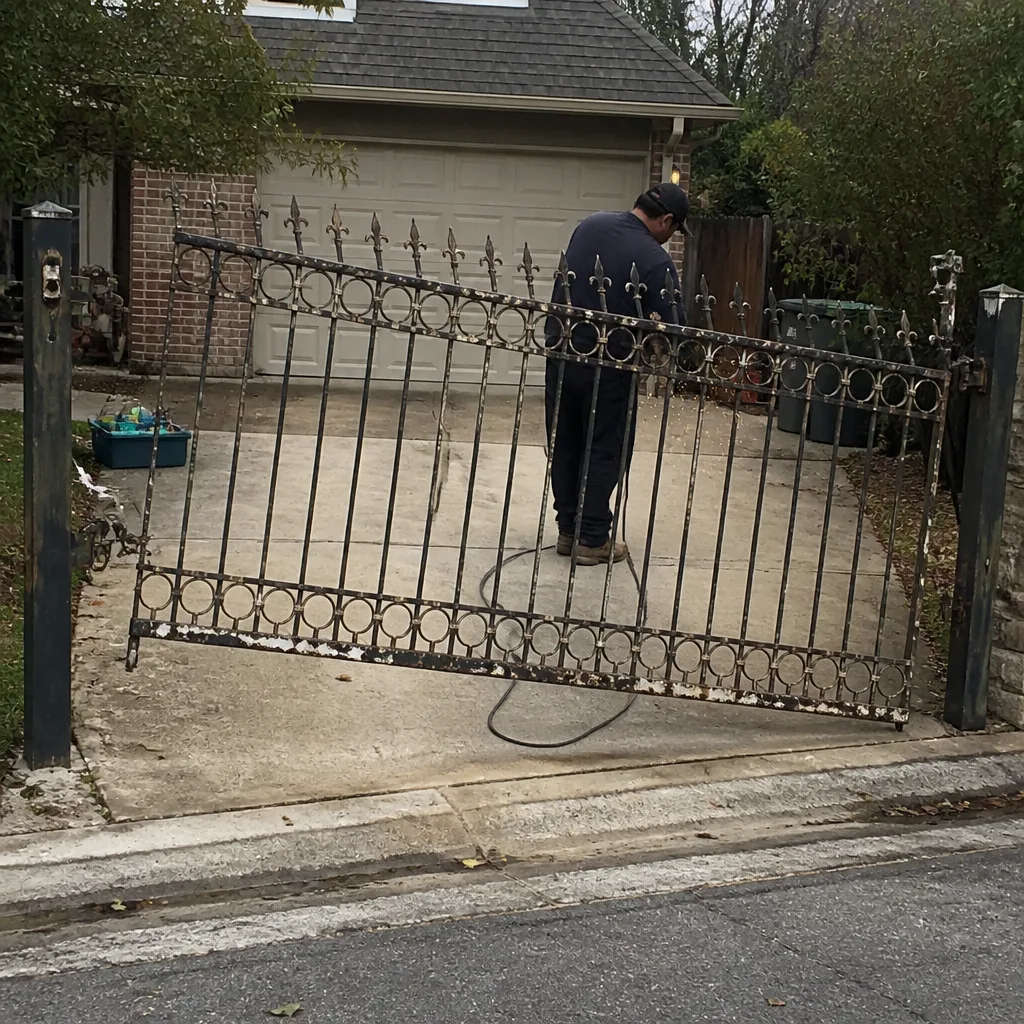 Before
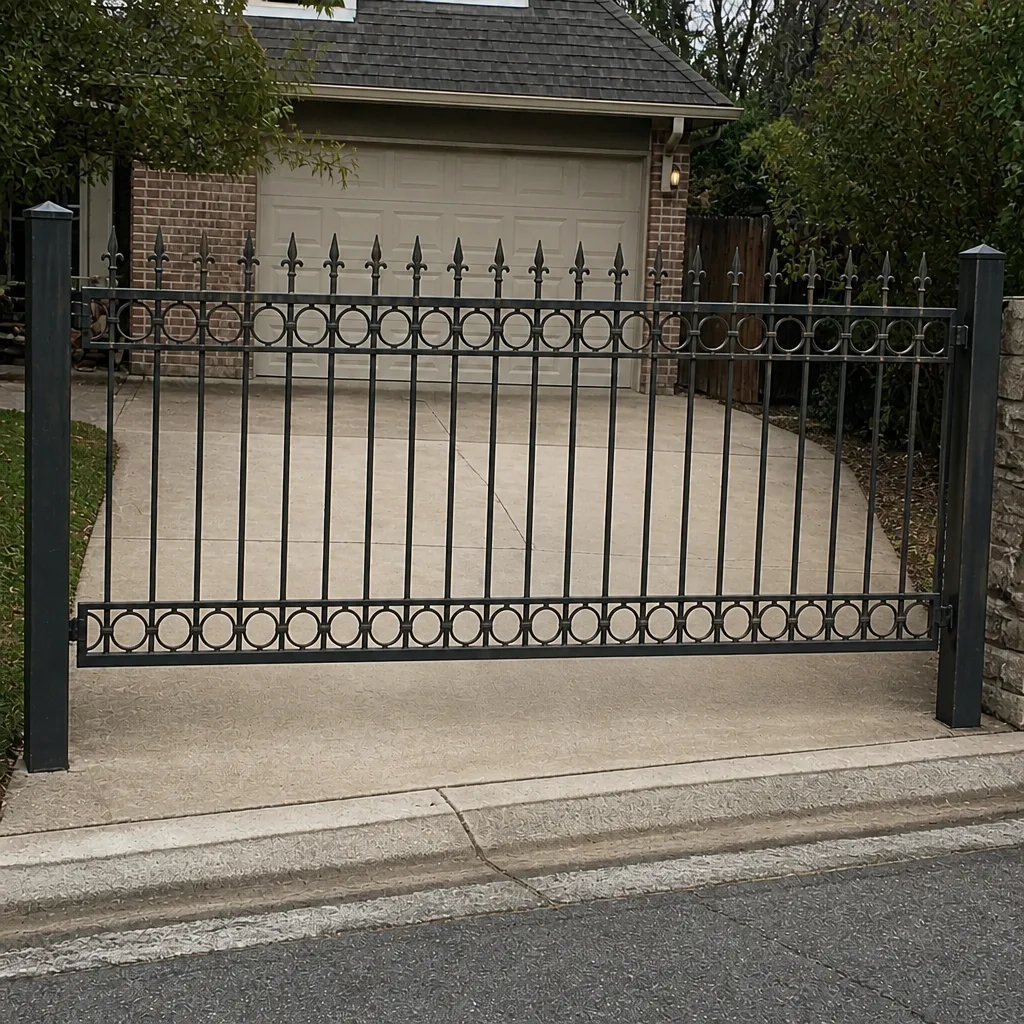 After
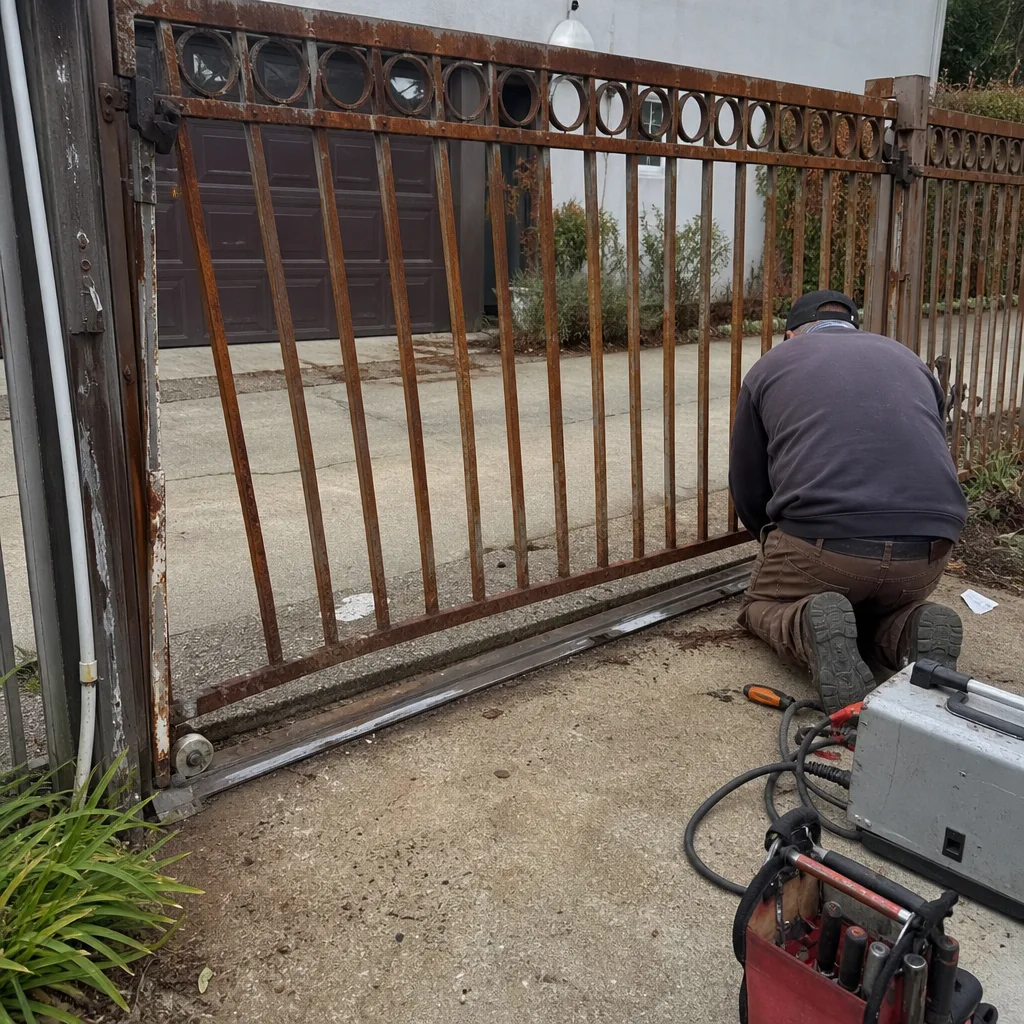 Before
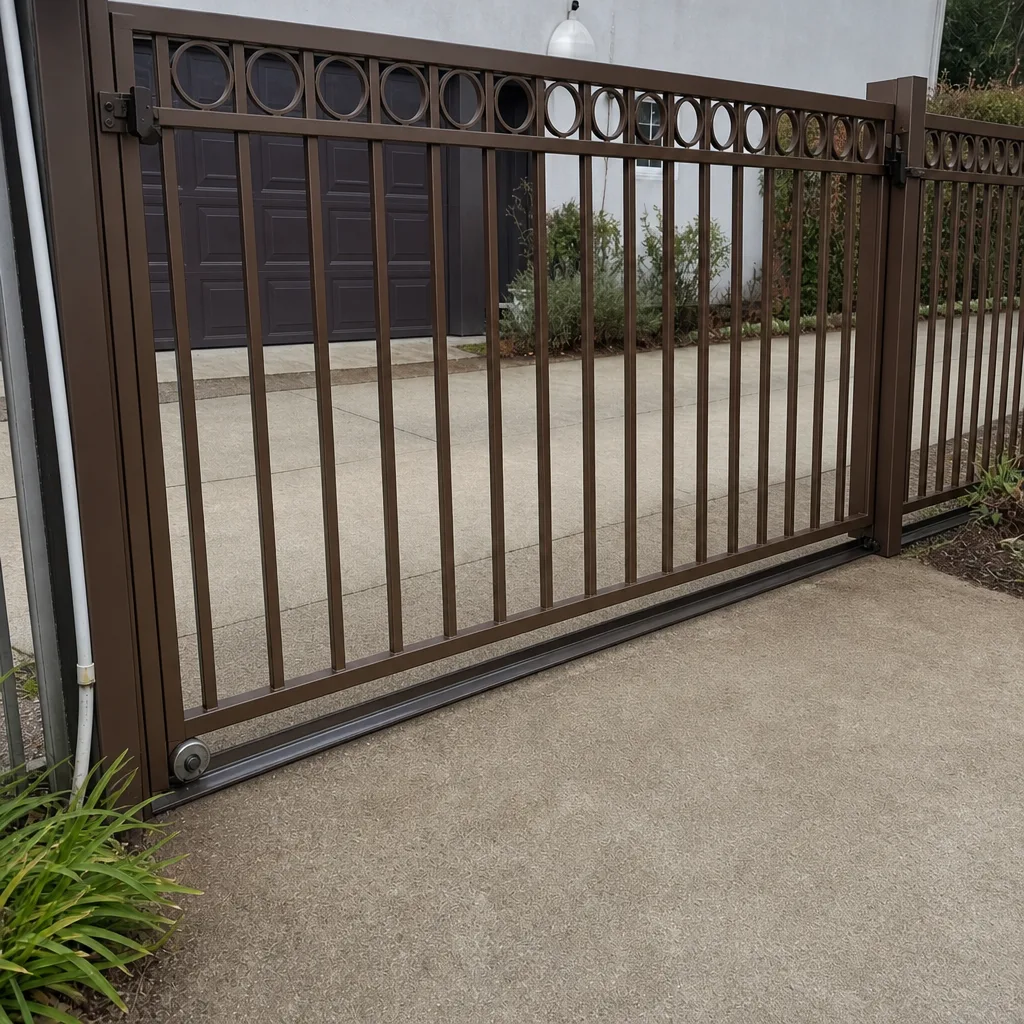 After
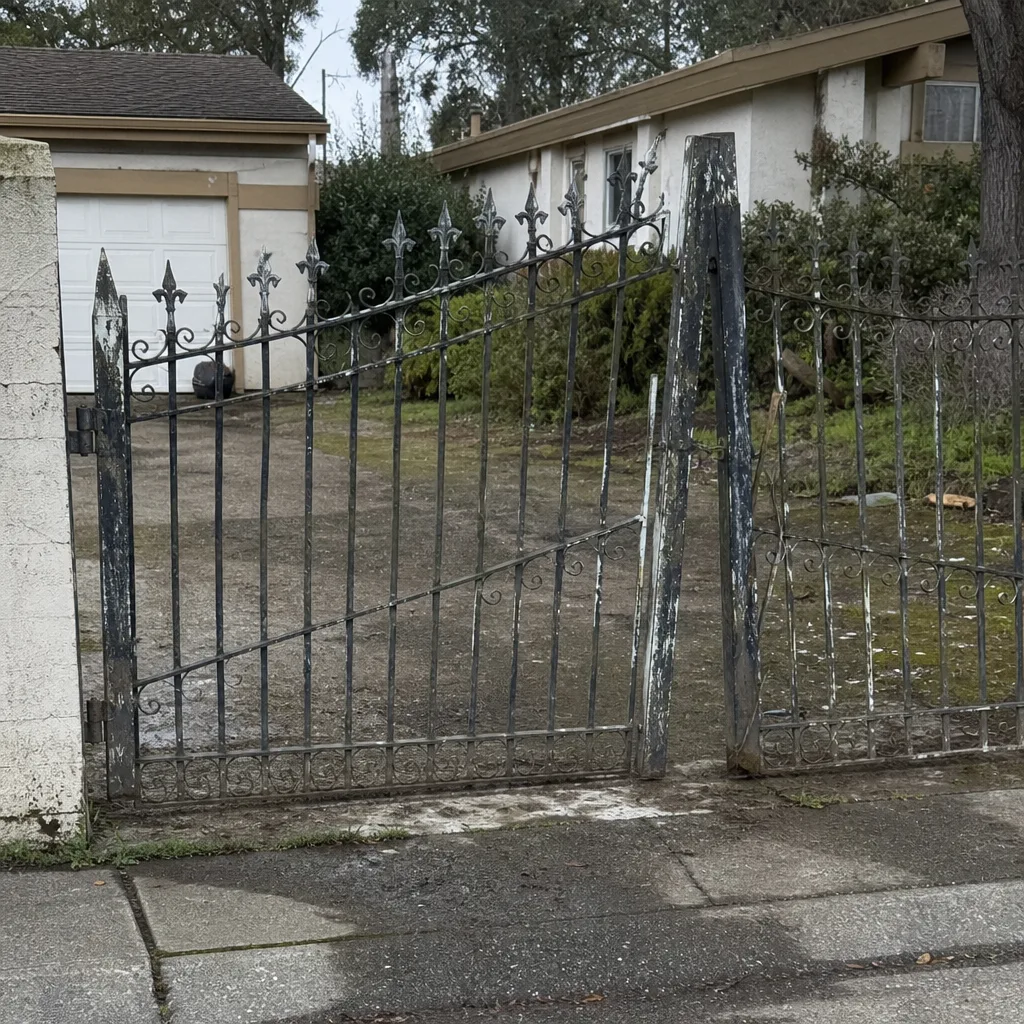 Before
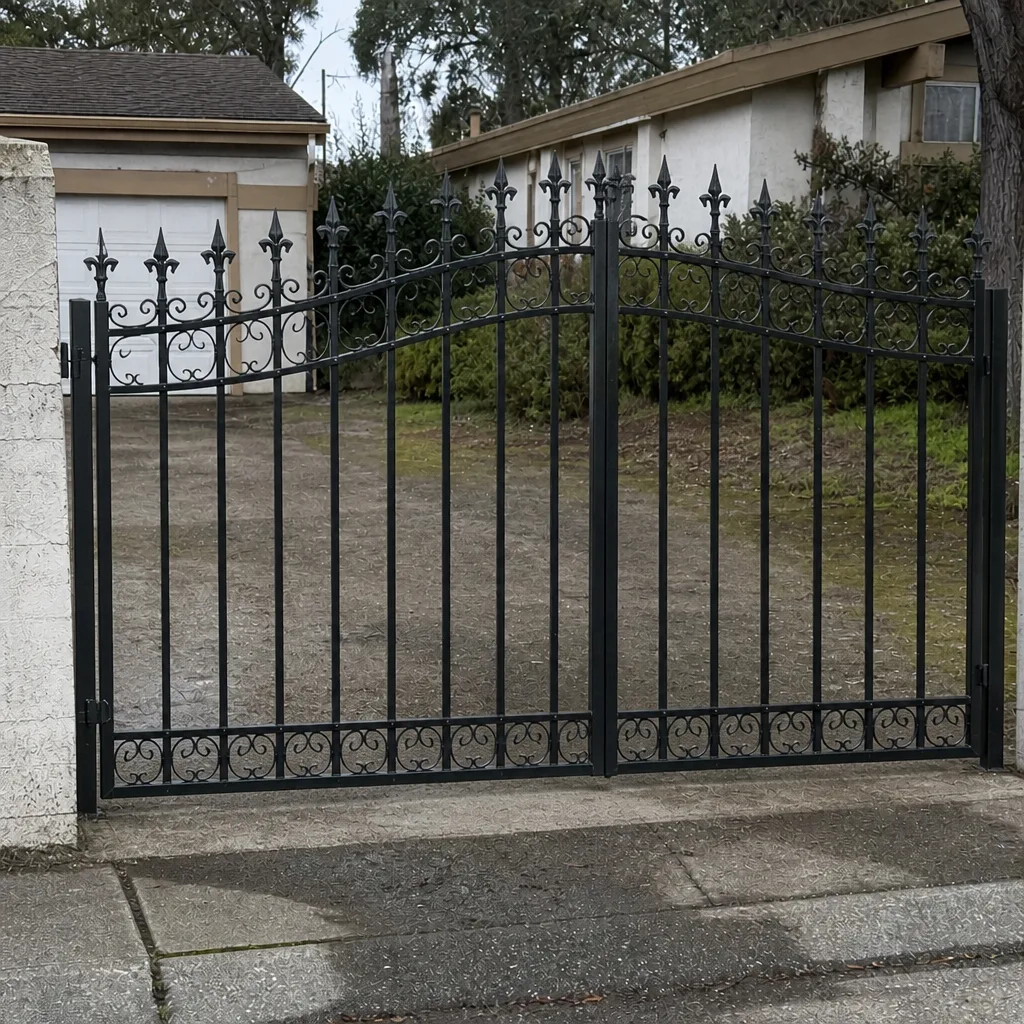 After
When to Call a Professional
Seasonal care catches a lot on its own. Where it stops is when something needs a specific diagnosis, a part replacement, or a safety check you’re not confident about. Call a specialist if your manual release won’t engage or the gate won’t move freely, if a battery backup fails the load test and you’re not sure of the correct replacement, if false-obstacle errors continue after you’ve cleared the track, if phantom cycles keep happening on cold mornings, if a gate frame stays out of square after a hinge adjustment, or if safety edges and reversing don’t work. These are the situations where a gate specialist earns their keep.
Gate Repair Roseville offers free estimates in Roseville. Call (855) 431-0356. We answer 24/7. Fast dispatch from 7am to 7pm, Sunday through Friday. Our technicians have up to 15 years of experience working with the systems Roseville properties actually use.
Frequently Asked Questions
Spring, roughly March through May, is the best window. Testing the battery backup and checking safety functions before the hot months arrive catches the heat-sensitive problems before summer can make them worse. Late summer is the right time to check frame alignment and hinge snugness, and fall is the time to clear acorn and leaf debris.
Test it under load by tripping the main power and seeing whether the gate opens and closes on battery alone. If it stalls, moves sluggishly, or the operator reports a fault, the battery likely needs replacement. Spring is the right time to do this, before the hot months degrade a marginal battery further.
Loop detector sensitivity shifts when the ground gets cold on frosty mornings, and that can trigger phantom open/close cycles. If the cycles only happen on cold mornings, the loop or its sensitivity setting is the likely cause. Call us to have it checked if the problem continues.
Most often, in fall, it’s debris – acorns or leaves – in the operator track increasing resistance the obstacle-detection system reads as an obstruction. Clear the track thoroughly and run a full cycle. If it keeps happening after the track is clear, the sensor or drive needs a look.
No. It catches most small problems early, which is valuable, but a specialist inspection checks things the routine doesn’t reach: specific parts, brand-specific diagnostics, and safety functions. The two work together. A spring routine followed by a professional check is the most reliable combination for a Roseville gate.
Yes. Our technicians work with the system you already have, whatever it is. We support nine major brands including LiftMaster, DoorKing, and Mighty Mule, and the right fix is always the right fix for the existing equipment, not a push toward a new brand. Call (855) 431-0356 for a free estimate.
The Bottom Line
Seasonal gate care in Roseville means working ahead of the heat, not reacting to it. Test your battery backup in spring, re-square frames and hinges in late summer, clear the track in fall, and watch for phantom cycles in winter. Do the manual-release test once a year, because it’s the check that matters most in a real emergency. None of this is difficult, and much of it you can do yourself. Where it needs a specialist, our Roseville team works on nine major operator brands and diagnoses by brand-specific logic rather than guesswork. Call (855) 431-0356 for a free estimate. We answer 24/7. Fast dispatch from 7am to 7pm, Sunday through Friday.
Written by the team at Gate Repair Roseville.