
Last updated November 15, 2026
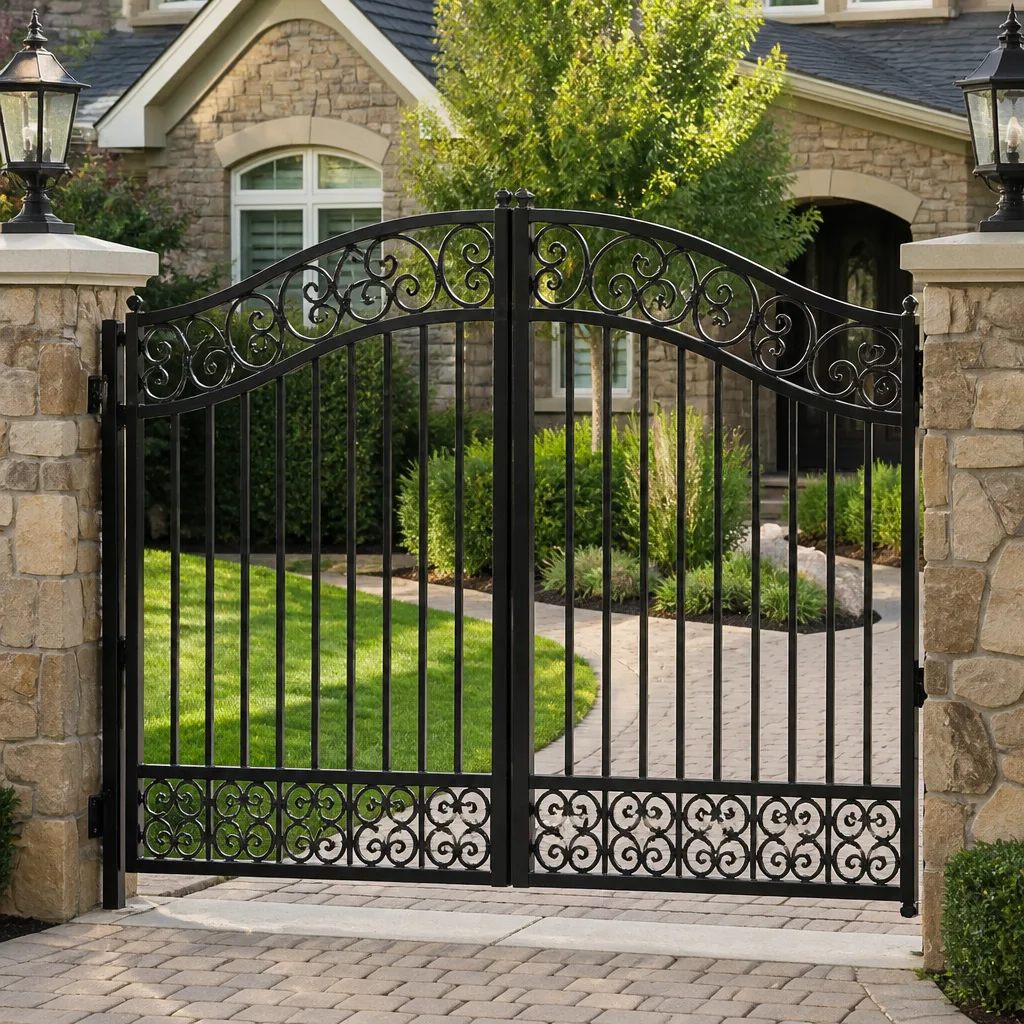 Wrought iron
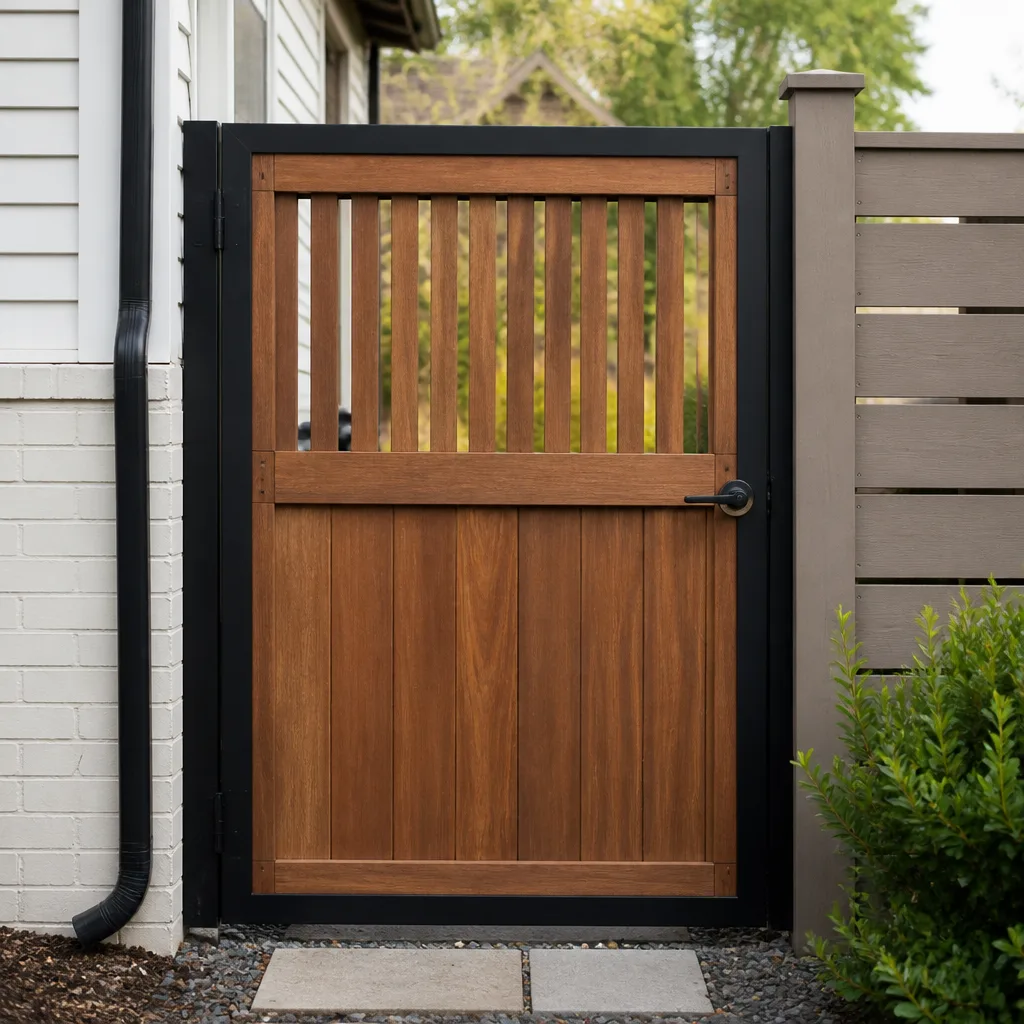 Wood & steel frame
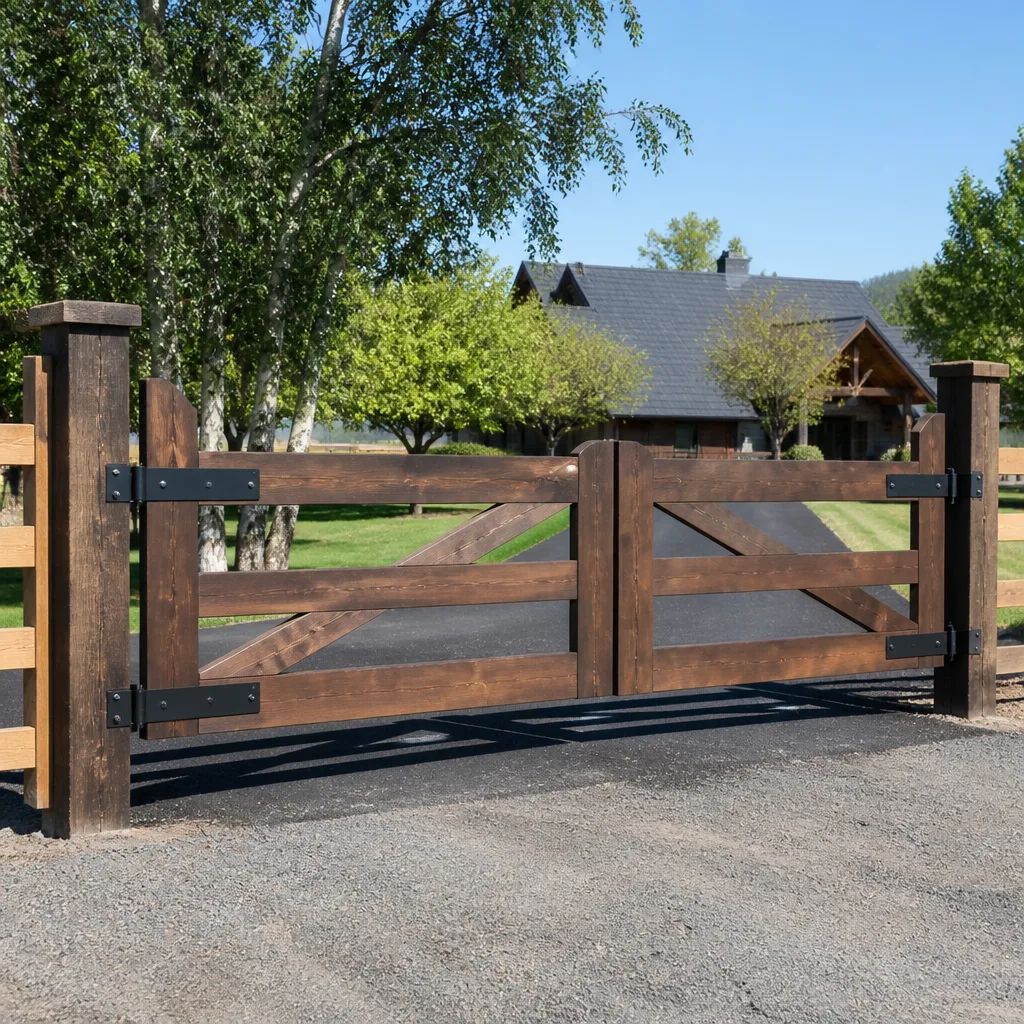 Farm & ranch
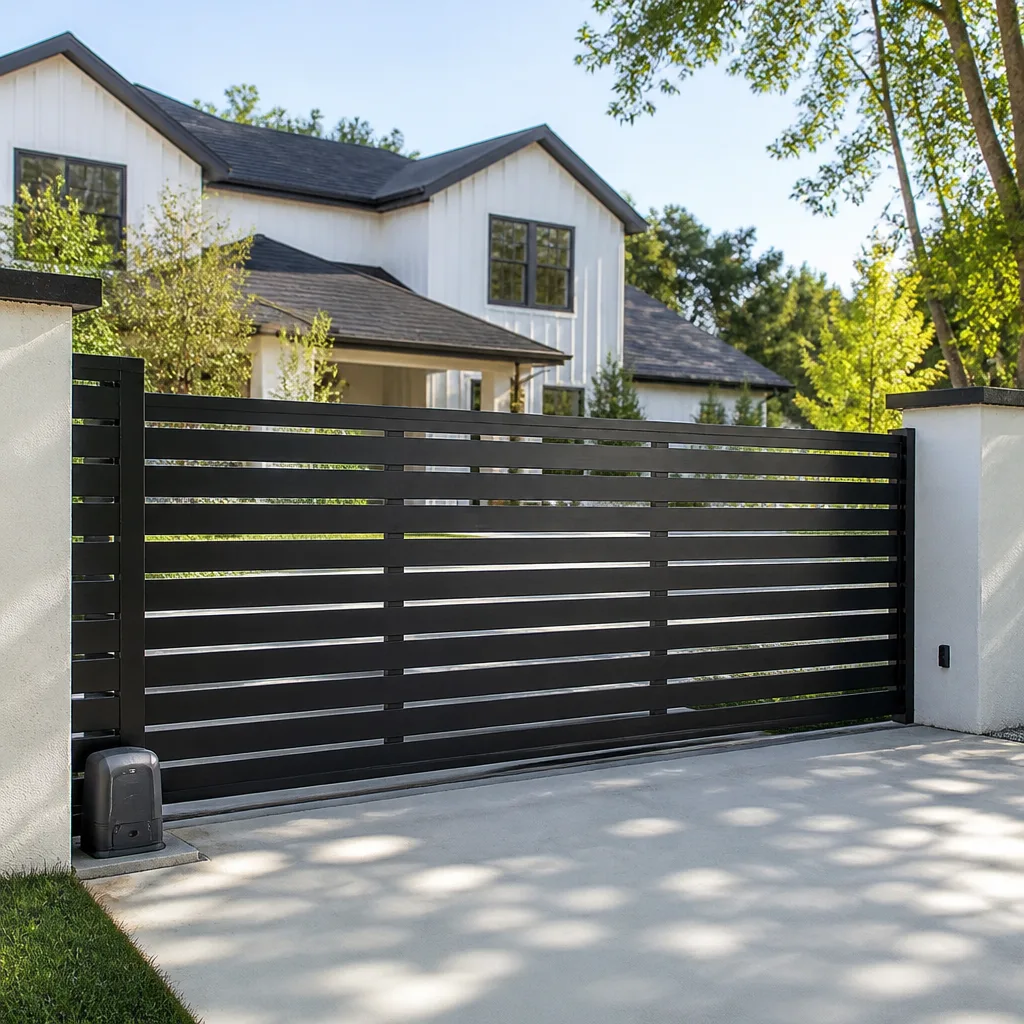 Sliding driveway gates
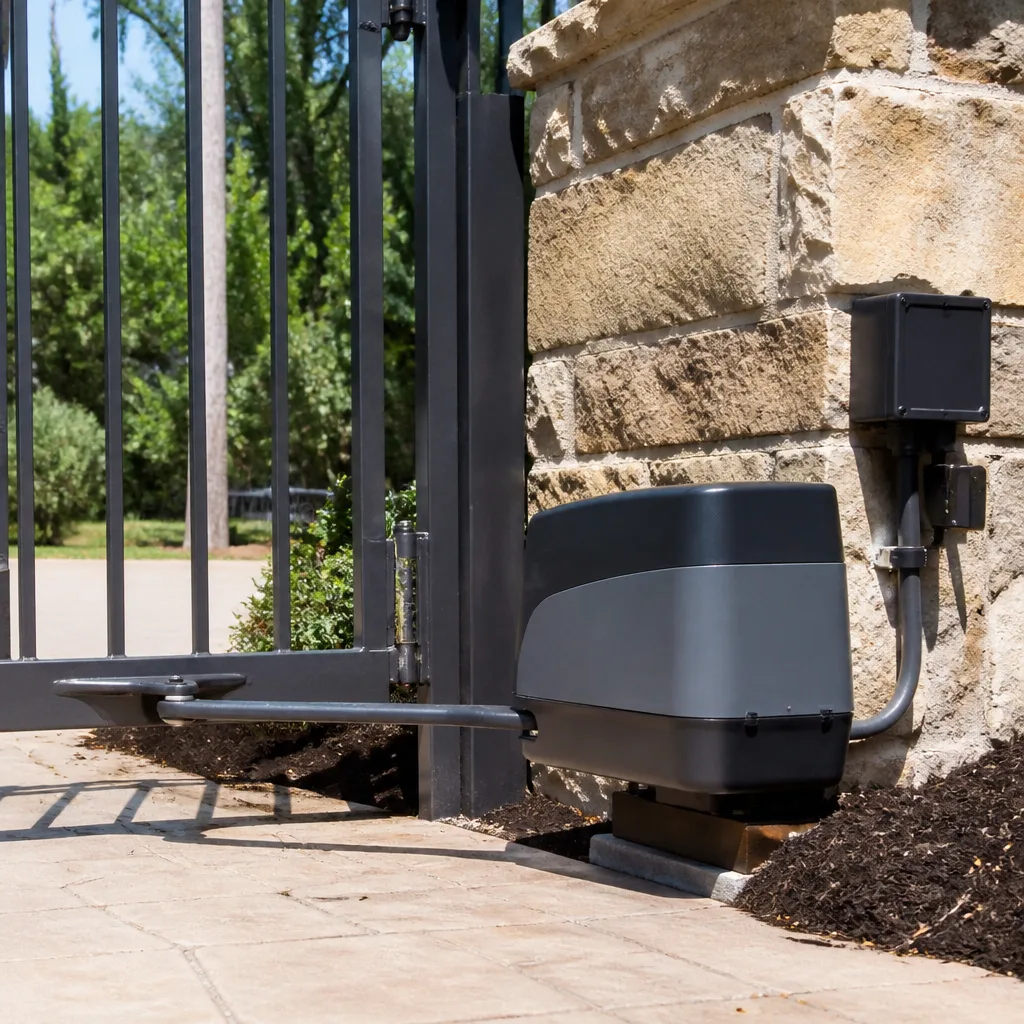 LiftMaster operators
Free on-site gate assessment - hinges, posts, and your LiftMaster or Nice gate operator checked before anything is quoted
The assessment is free and the quote is the invoice.
Get your free estimateHow to Hire a Gate Repair Contractor in Roseville: A Step-by-Step Guide
The contractor who installed your fence and the one who reprogrammed your gate operator need to know entirely different things, and most homeowners don’t realize these are almost never the same person. A fencing crew understands posts, panels, and fabric. A garage-door company understands torsion springs and sectional door tracks. Neither one necessarily knows how a DoorKing control board logs a fault or why a Ghost Controls receiver drops a remote after the battery is swapped. Hiring the wrong trade doesn’t usually show up as one inflated invoice; it shows up as repeat visits, misdiagnosed parts, and an operator that still acts up after the third callback. In this guide we’ll walk through the questions that separate a real gate specialist from a generalist, how to read a quote, what to ask about scope, and how to vet a contractor in Roseville before you book the visit.
Quick Answer
To hire a gate repair contractor in Roseville, confirm four things in one phone call: the contractor handles gate systems as a dedicated trade, not fencing or garage doors as a sideline; they can explain how they’ll diagnose your specific operator brand rather than guess; the quote is written and diagnostic-first, with parts and labor broken out; and the price is agreed before any work starts. Ask what brands they work on and how they read a control board fault. A vague answer tells you they’ll be learning on your system.
Styles & brands we work with
- Wrought iron
- Wood & steel frame
- Farm & ranch
- Sliding driveway gates
- LiftMaster operators
Table of Contents
- Why a Gate Specialist Beats a Fencing or Garage-Door Company
- The Five Questions to Ask Before You Schedule
- Why License Type Matters: Fencing vs. Electrical Component Repair
- How to Read a Gate Repair Quote
- Gate Tune-Up vs. Proper Diagnostic: Which Do You Need?
- What a Legitimate Specialist Carries That a Handyman Doesn’t
- Roseville-Specific Things to Check Before You Hire
- Small Operators, HOAs, and Commercial Gate Systems
Why a Gate Specialist Beats a Fencing or Garage-Door Company
Gates fail in ways fencing and garage-door crews rarely see enough to recognize. The failure mode is usually electrical, mechanical, or both at once. An operator manufacturer designs its control board, receiver, limit switches, and safety edges as one system. The person diagnosing that system needs to know how those parts talk to each other, not just how to swap a hinge.
The trade split is real. A fencing contractor installs a gate as part of a fence line and may not touch the operator at all. A garage-door company is fluent in overhead doors, torsion springs, and garage-specific openers, and their tooling reflects that. A gate specialist works daily with articulating arms, slide tracks, worm-drive operators, and the wiring that supplies them.
That’s the reason we keep our focus narrow at Gate Repair Roseville. Every call we take is on a gate, every technician we connect you with is trained on gate operators, and every part discussed on the phone is a gate part. When you book a visit, ask the contractor to describe the last five gate jobs they ran. If they can’t easily tell you the operator brands and how they diagnosed the fault, you’ve found your answer.
The specialist-versus-generalist gap shows up fastest on electric systems. Wired accessories, exit loops, safety photo-eyes, and operator-specific remote pairing all require hands-on familiarity with the brand. For that scope, look for a contractor who treats electric gate repair as core work, not as an escalation they outsource.
The Five Questions to Ask Before You Schedule
One phone call is enough to sort a specialist from a generalist. Ask these five questions in order. A confident specialist will answer all of them without pause. A generalist will hedge on at least two.
- “Which gate operator brands do you work on regularly?” A specialist will name specific brands quickly. If the answer is a vague “most of them,” press for three names. We cover LiftMaster, FAAC, BFT, Linear, Viking, Ghost Controls, DoorKing, Elite, and Mighty Mule, and we’re clear about that list.
- “How do you diagnose a control board issue?” The right answer describes reading fault codes, testing power to the operator, checking limit switches, and confirming accessory wiring. The wrong answer is “we just replace the board.”
- “Is your quote diagnostic-first or flat-rate?” Diagnostic-first means they find the fault, price the fix in writing, and you decide. Flat-rate often means an arbitrary bundled price with invisible parts cost.
- “Do you handle the power run and safety devices?” Electric gates need a proper supply circuit and working safety photo-eyes or loops. A contractor who says “that’s not my part” will leave you juggling two trades.
- “What’s your warranty on parts and labor?” You want a clear answer separated into parts coverage and labor coverage, in writing.
Listen for confidence, not speed. A vague answer on questions one and two reveals the real gate experience level. A contractor who can talk through the part of your system they expect to fail is one who’s been inside that brand before.
Why License Type Matters: Fencing vs. Electrical Component Repair
A fencing contractor’s license covers fence construction and gate installation as part of a fence line. It does not necessarily cover electrical component repair on the operator or the supply circuit feeding it. This is where a lot of Roseville homeowners get surprised after a failed repair: the contractor who took the job was legally clear to set the post and hang the gate but not to troubleshoot the control board or re-terminate a 120V feed.
What to check on any quote:
- Scope listed in writing. The quote should spell out what’s being repaired, replaced, or left alone.
- Who does the electrical part. If the contractor can’t do the electrical service, they should say so and tell you who will.
- Permit awareness. For a new installation or a significant structural change, ask the contractor whether the city of Roseville typically requires a permit for that scope. A specialist knows when to point you to the city’s building department for a definitive answer.
- State license confirmed. Look up the contractor’s license status with the California State License Board before work starts. Ask which classification they hold and what it covers.
Don’t accept “we’re licensed” as an answer. Ask which classification and confirm it. For component repair inside the operator, ask directly: “Are you handling the low-voltage accessory side or the line-voltage feed?” A specialist will know the difference and tell you which part they do.
If you need the exact permit requirements for a gate at your address, the city of Roseville building department is the correct authority to confirm with, and a good contractor will tell you that rather than guess.
How to Read a Gate Repair Quote
A gate repair quote should read like a short diagnosis, not a lump-sum invoice. If you can’t tell from the quote which parts are being replaced, which are being repaired, and how labor breaks down, you can’t compare two bids. Here’s what a solid quote shows and what to flag.
Green flags on a quote
- Diagnosis stated in plain language: “operator control board not responding to remote; board fault confirmed” beats “fix gate.”
- Parts listed with model or manufacturer, not a generic “replacement board.”
- Labor broken out by task, not bundled into a flat “repair” line.
- Warranty stated for parts separately from labor, with a duration in writing.
- Final price agreed before work starts, with a note that changes need your approval.
Red flags on a quote
- A flat “diagnostic fee” that only gets credited if you approve the repair. This is a common tactic that pressures approval before you see the parts cost.
- Parts markup that isn’t shown. Ask for the parts line by name and model.
- Vague warranty language such as “guaranteed work.” Ask for terms in writing.
- Any quote that prices line voltage work without confirming the contractor’s scope covers it.
- A firm “flat rate” that comes in significantly below the parts cost alone. That usually means a used or aftermarket substitute.
At Gate Repair Roseville we price every job by a written estimate after diagnosis, and the price you approve is the price you’re billed. The written estimate sets the final price, full stop. No mystery line items, no surprise on the invoice.
Gate Tune-Up vs. Proper Diagnostic: Which Do You Need?
These are different services, and the distinction is worth understanding before you call. A tune-up is a preventive visit: lubricate tracks and hinges, confirm limit-switch positions, check battery backup health, test safety devices, and verify operator settings. A diagnostic is a fault-finding visit: something is broken, intermittent, or not working correctly and needs to be located.
When a tune-up is enough
- The gate opens and closes reliably.
- No strange sounds, grinding, or hesitation.
- Safety photo-eyes and loops test correctly.
- Remote and keypad work on first press.
- No visible wear on hinges or rollers.
When you need a diagnostic
- The gate operates intermittently or only sometimes opens from the remote.
- The operator arm or slide motor stalls, reverses, or runs past its limit.
- One remote or keypad works and another doesn’t, on the same brand.
- The gate opens but does not close, or closes but does not latch.
- A code or fault indicator shows on the operator housing.
It’s tempting to book a tune-up when the real problem is a fault. Ask on the phone: “My gate does X. Is that a tune-up or a diagnostic?” A specialist will tell you which, and often how much of the diagnostic you can do over the phone by reading back the fault indicator. Turn the call into a diagnostic if the answer to “is this a tune-up or diagnostic” is unclear.
What a Legitimate Specialist Carries That a Handyman Doesn’t
The parts and tools in a truck tell you who you’re really hiring. A general handyman can tighten a hinge and grease a track. That’s about the ceiling of a generalist tool kit. Here’s what separates a gate specialist’s setup from a handyman’s, whether the visit is in Roseville or anywhere else.
- Brand-specific diagnostic tools. Multimeters set up for operator testing, test remotes for common brands, and fault-code references for models like DoorKing entry systems and LiftMaster gate operators.
- Common control boards on hand. A specialist carries the boards and receivers that fail most often on the systems they service, which is why simple board replacements can be done the same day.
- Safety edge and photo-eye stock. Replacing a failed safety device needs the right replacement on hand, matched to the operator’s input type.
- Remote and keypad programming tools. Adding and pairing new remotes to a Ghost Controls or Mighty Mule operator needs the right pairing procedure, not just a universal remote.
- Operator-specific fasteners and hinges. Gate hinges, rollers, and articulating arm hardware differ from garage-door parts.
Ask what the technician will bring. A vague “we’ll see when we get there” usually means a diagnostic visit followed by a parts-order wait. A specialist will often tell you on the phone what they expect to test and what parts they’ll bring for the brand they’re going to see.
Our technicians have up to 15 years of experience on gate systems of every type, and the tool kits they carry reflect that focus. That’s the kind of setup that turns a Monday service call into a working gate the same visit.
Roseville-Specific Things to Check Before You Hire
Roseville sits on the eastern edge of the Sacramento Valley, and the summer heat is the routine challenge for gate systems here, not snow or salt. That changes what a specialist checks and what you should ask about.
- Heat and motor duty. Long summer stretches of dry heat stress operator motors and control boards, so ask how the contractor tests motor temperature and duty cycle on a hot day.
- Dust and pollen on tracks. Open slide tracks accumulate debris faster than the coastal or mountain climates. Ask whether the diagnostic includes track cleaning and alignment.
- Winter rain and drainage at the post footing. Rain percolating around a footing can shift a post over time. Ask whether the contractor checks post stability and drainage at the footing as part of the diagnostic.
- Older neighborhoods. Foothill areas, older Roseville neighborhoods, and established subdivisions often have gates installed long before current operator models, and the contractor should be able to service legacy systems without pushing a new operator.
- HOA requirements. If you live in an HOA, ask about gate access-or-call systems that integrate with visitor logs and roll-call management. DoorKing and Elite systems are common in HOAs and commercial lots, and they need a contractor who knows the programming side.
None of these are “gotchas” a Roseville homeowner can’t handle. They’re the questions worth asking on the phone. A specialist who works Roseville regularly will know these conditions personally. A contractor who services a 40-mile radius and mostly builds fences won’t.
If your gate is at the boundary between residential and public streets, ask about city of Roseville permits before the work starts. A specialist will tell you when to call the city, rather than guess. For general information on services in Roseville, that’s where we point most local homeowners first.
Small Operators, HOAs, and Commercial Gate Systems
Not every gate is a driveway gate. Roseville has a real mix of residential driveways, HOA entries, and commercial lots, and each category expects different things from a contractor. The hiring checklist changes a little in each case.
Residential driveway and pedestrian gates
- Manual swing gates need clean hinge geometry and correct post alignment.
- Automated swing gates need an operator rated for the panel weight and cycle count.
- Auto-close and photo-eye coverage are the priority for safety, especially with kids and pets.
- Battery backup health matters when power is interrupted, and the procedure for manual override on a dead operator is a legitimate question to ask.
HOA entries and shared access
- Ask how the contractor manages time windows around resident traffic. A gate that’s down for two days in an active HOA is a problem for everyone.
- Confirm the diagnosis includes receiver and keypad programming, because most HOA access issues are code-related, not mechanical.
- Ask whether the contractor can provide documentation the board can archive for the next service call.
- For visitors and vendor access, systems like DoorKing are common, so confirm the contractor has programmed that family of operators before.
Commercial lots and gated communities
- Commercial gates often run high cycle counts, so ask about duty rating on the replacement operator.
- Ask how safety loops, photo-eyes, and warning signage are handled on a commercial site.
- Check whether the contractor handles line voltage or works with an electrician on the supply circuit.
If your gate is part of a shared system or an HOA, the most useful question is: “What’s the timeline to restore normal operation, and what’s the fallback if parts are delayed?” A specialist with an operator-specific setup can often answer with specific timing. A generalist often can’t.
Common Mistakes to Avoid
- Hiring the fence installer you already trust. A fence crew is the right call for a new fence line, but a gate operator is a different system. Confirm gate operator training before booking.
- Hiring a garage-door company that “does gates too.” Some do, genuinely. Many don’t. Ask what percentage of their work is gate operators, and take the answer at face value.
- Accepting a flat-rate diagnostic fee that gets “credited” if you approve the repair. That structure pressures approval before you’ve seen the parts cost. Diagnostic-first pricing, where the diagnosis is priced and the repair is priced separately, is cleaner.
- Not asking about the electrical scope. A contractor who can unfasten bolts but not troubleshoot the control board will end up handing the job to someone else mid-repair.
- Approving a “replacement operator” quote without a diagnosis. Sometimes the motor is bad. Often the control board or a connection is. Get a written diagnosis before agreeing to a full replacement.
- Skipping the warranty question. Ask for parts warranty and labor warranty separately. “Guaranteed” means nothing on an invoice.
- Ignoring Roseville’s summer duty cycle. An operator that stalls on the hottest week of the year may be sized wrong for the load, not broken. Ask the contractor to check duty rating before replacing parts.
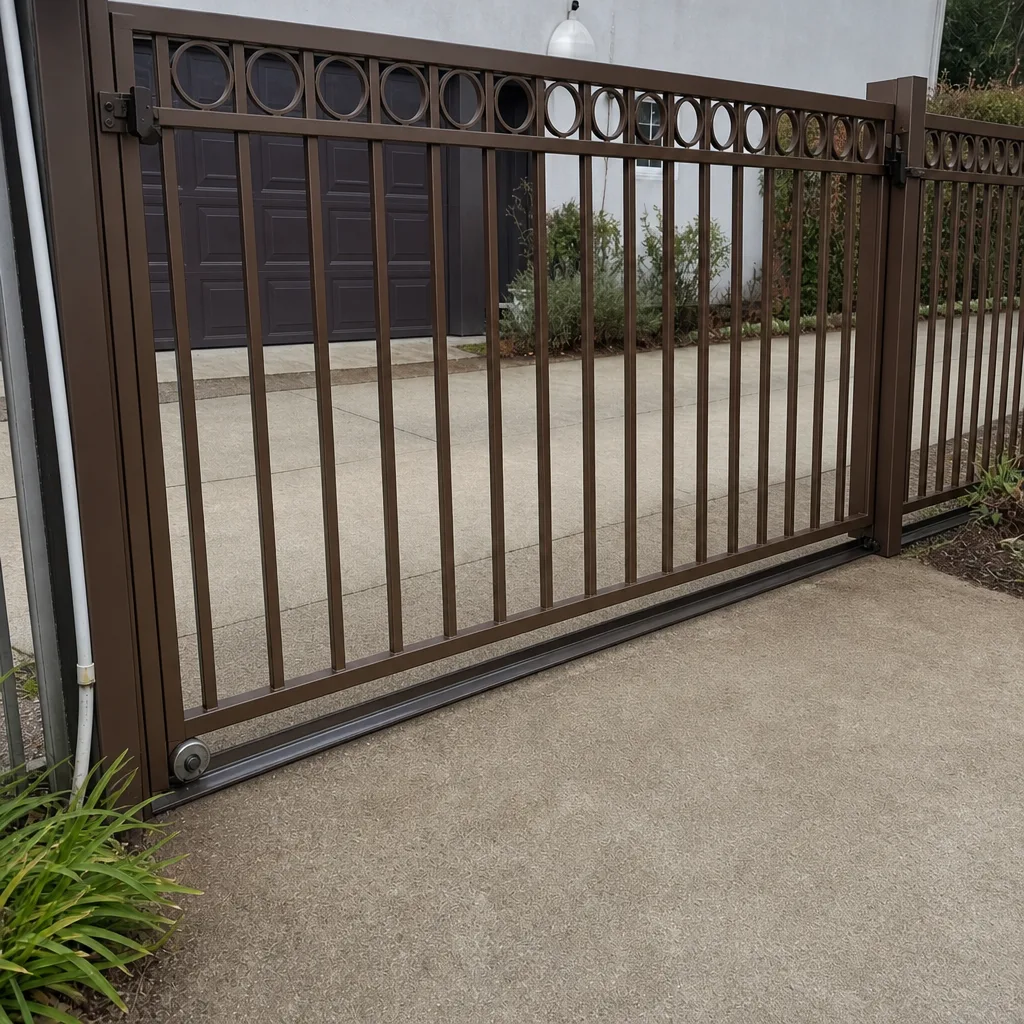
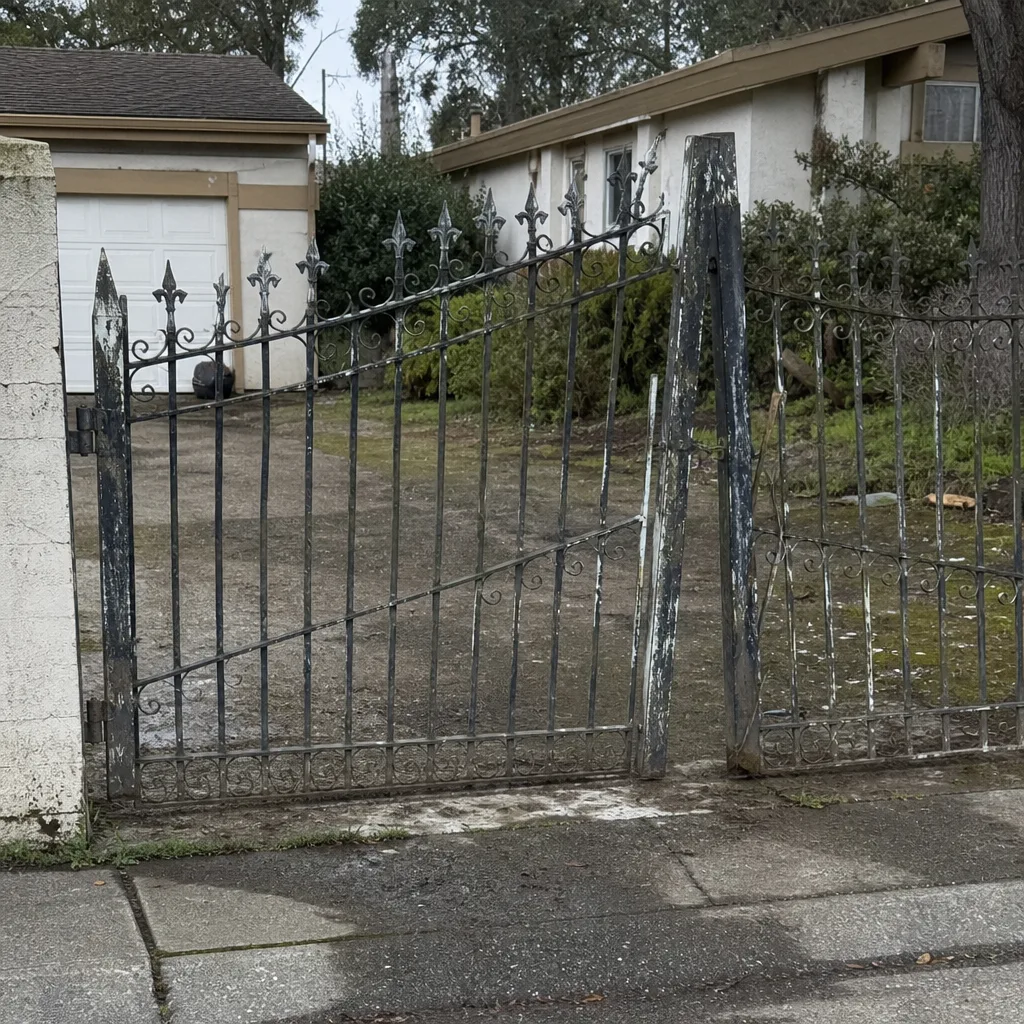
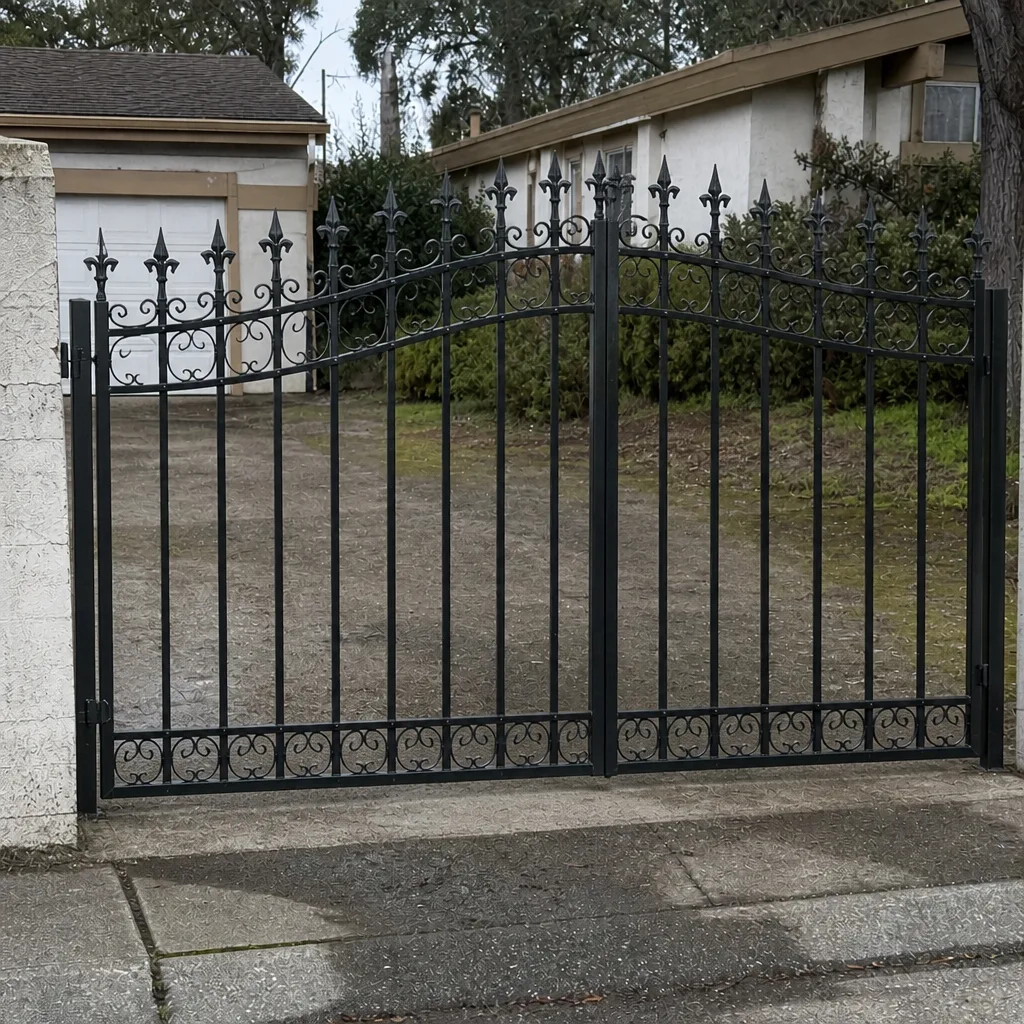
See the difference
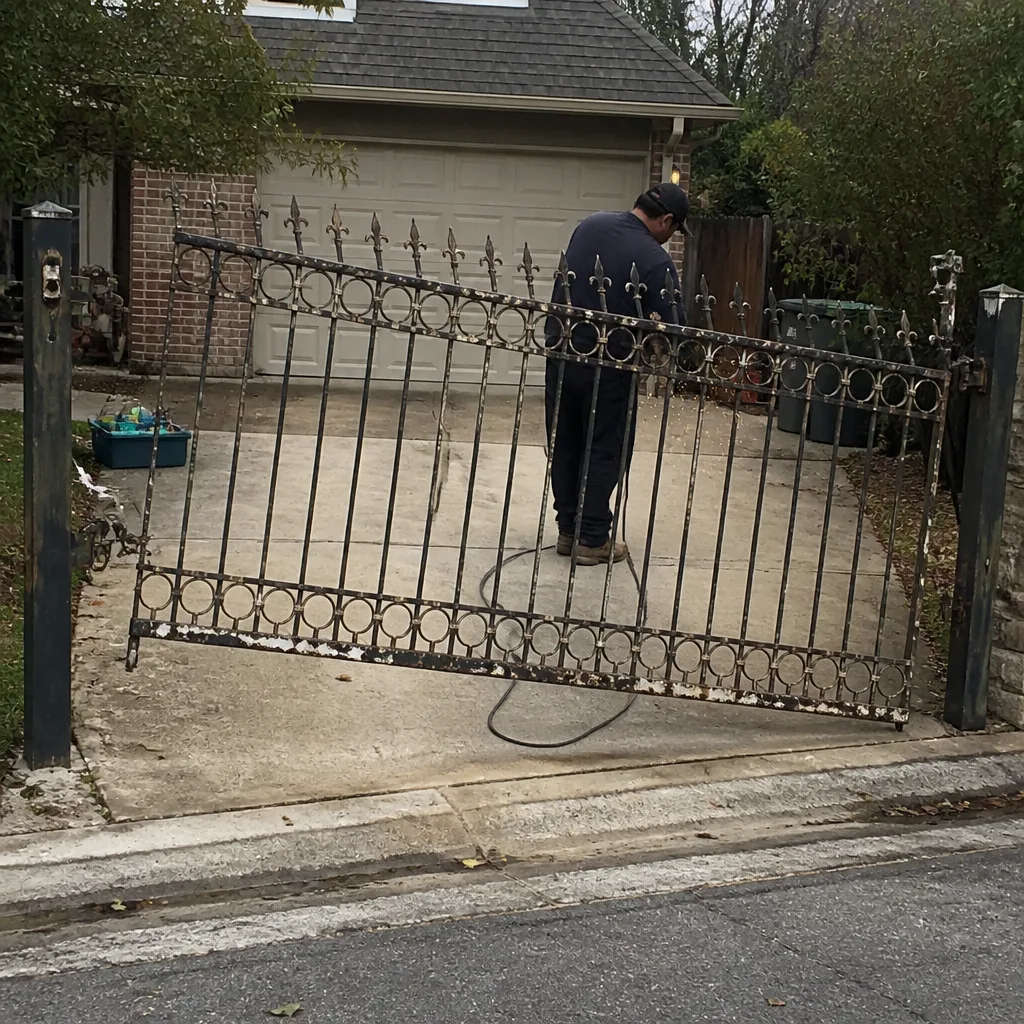 Before
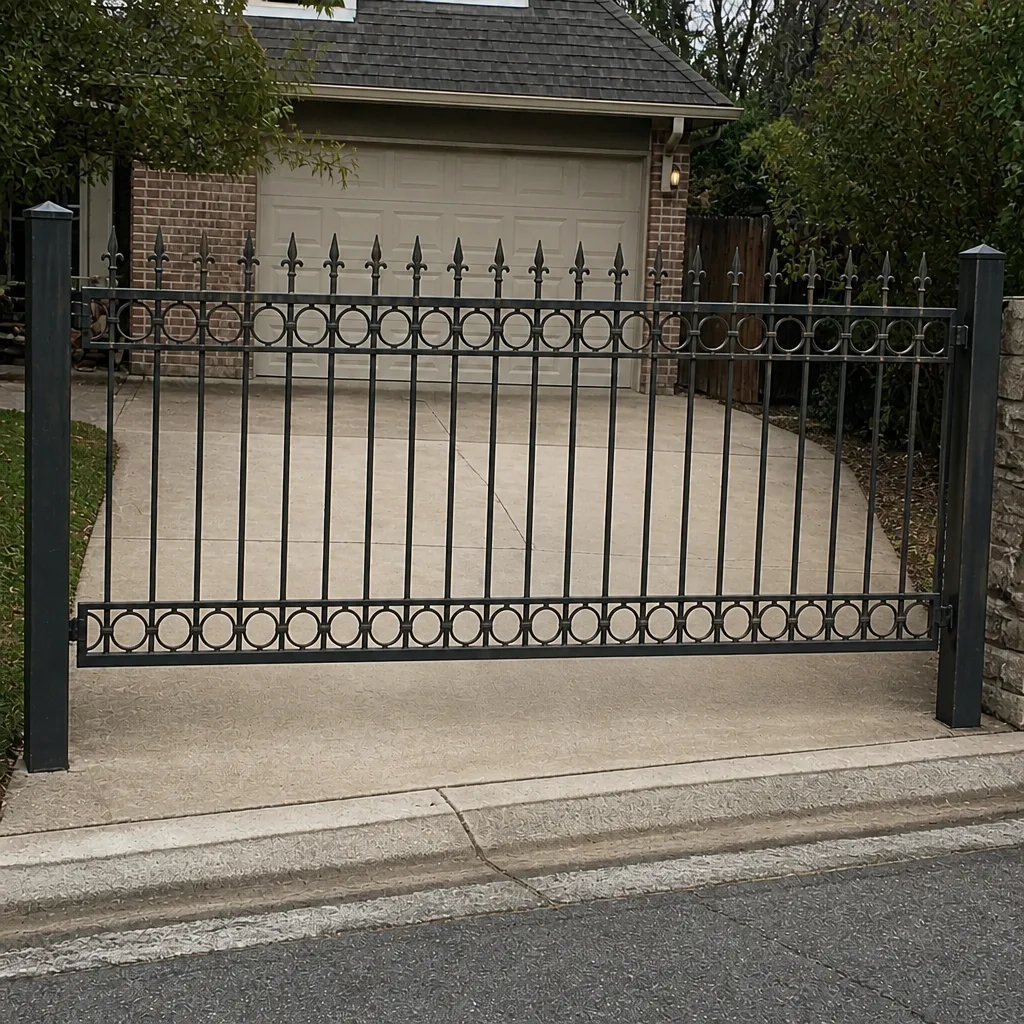 After
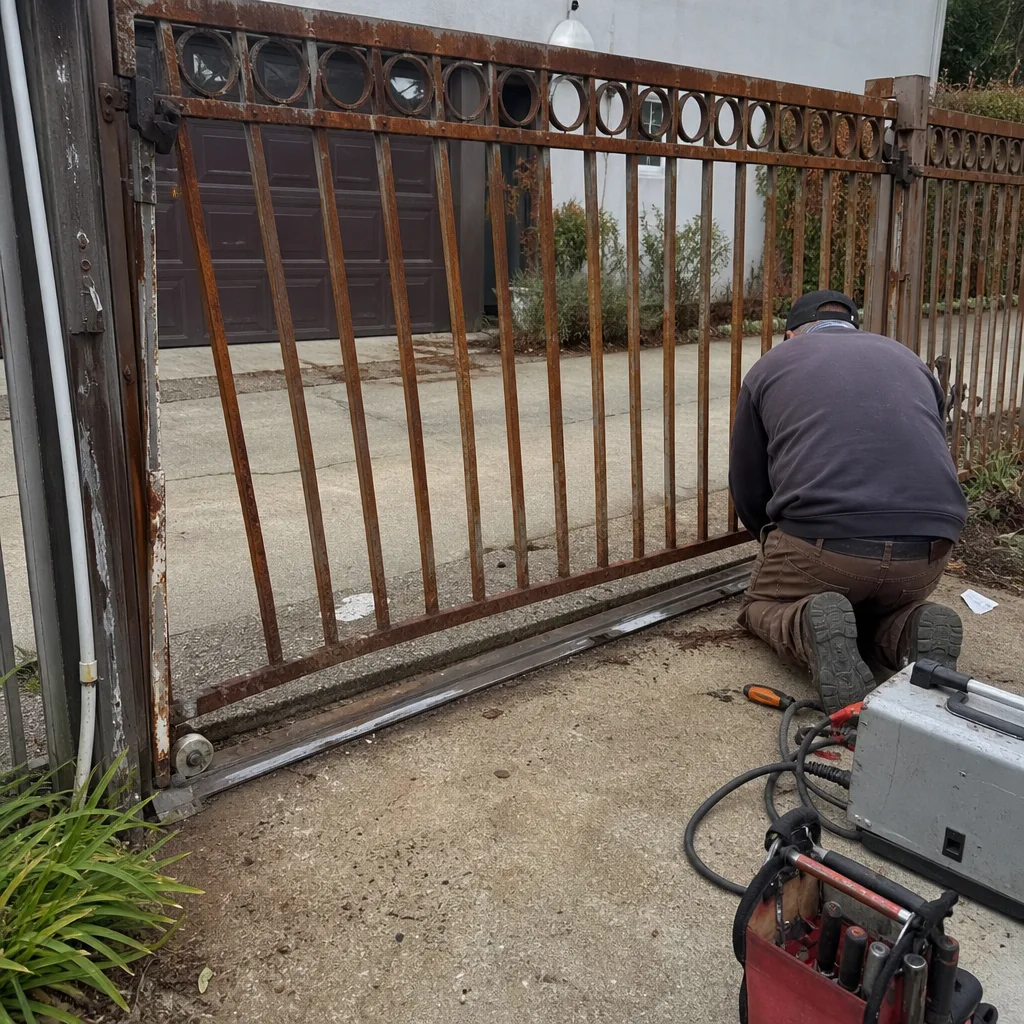 Before
 After
 Before
 After
When to Call a Professional
Some gate issues should not wait, and some should not be a do-it-yourself project. Call a professional when the operator runs but doesn’t move, when the gate closes on its own, when a safety photo-eye isn’t stopping the gate on the obstruction test, or when the supply circuit behaves intermittently. The dangerous parts on a gate are the operator’s line-voltage wiring, heavy panels that can crush, and slide gates that jump the track. Don’t try to adjust a swing arm, re-terminate a supply circuit, or lift a heavy panel back onto a slide track alone. If the gate is at the boundary of an HOA entry or commercial lot, call before someone gets hurt.
For everyday gate problems, the decision matrix is simple: if the gate is fixed to a post and something about the operator is wrong, call a gate specialist. If the gate is manual and just swings poorly, ask whether the post or hinge has shifted. If there’s any electrical component to diagnose, book a specialist. Gate Repair Roseville offers free estimates in Roseville. Call (855) 431-0356. We answer 24/7. Fast dispatch, 7am-7pm, Sunday through Friday.
Frequently Asked Questions
Ask what percentage of their work is gate systems and what brands they handle. A specialist will name specific operator brands immediately and tell you what they’ll test on your system. We cover LiftMaster, FAAC, BFT, Linear, Viking, Ghost Controls, DoorKing, Elite, and Mighty Mule, and our technicians diagnose by brand. If the contractor can’t name three brands and describe a diagnostic step, keep looking. Call (855) 431-0356 for a free estimate.
A fencing contractor’s license covers fence construction and gate installation as part of a fence line, but the electrical component side of a gate operator is a different scope. Before hiring, ask which task the contractor’s license covers and confirm the scope in writing. If the electrical side isn’t covered, ask who handles it. Call (855) 431-0356 for a free estimate.
A proper gate repair quote includes the diagnosis in plain language, the parts being replaced with model or brand, labor by task, and warranty terms separated into parts and labor. It should also state that the price is agreed before work starts. If any of those are missing, ask for them in writing before approving the repair. Our prices are set per job by the written estimate. Call (855) 431-0356 for a free estimate.
A tune-up is a preventive visit for a gate that works but needs lubrication, limit check, and safety testing. A diagnostic is a fault-finding visit for a gate that stutters, reverses, or won’t respond. If the gate is misbehaving, ask for a diagnostic. If the gate is fine and just due for service, ask for a tune-up. Calling with a specific description is the fastest way to book the right visit. Call (855) 431-0356 for a free estimate.
A general handyman can tighten a hinge and grease a track, but the operator’s control board, receiver, safety devices, and line-voltage wiring need a gate specialist, and the electrical portion needs someone licensed for that scope. The safe move on anything operator-related is to hire a specialist who works on gate systems as a dedicated trade. Call (855) 431-0356 for a free estimate.
Installation is measured, ordered, and scheduled. A full gate installation typically includes site assessment, post footing to proper depth, panel or slide fabrication, operator mounting, safety edge and photo-eye installation, supply-circuit coordination if required, and testing before handover. It is not a same-day repair job. Ask for a written quote with a schedule, and confirm the permit requirements with the city of Roseville. Call (855) 431-0356 for a free estimate.
The Bottom Line
The biggest mistake when hiring a gate contractor in Roseville isn’t picking the highest price. It’s hiring a fencing contractor or a garage-door company that accepts gate work without operator-specific training. The fix is simple: five questions on the phone, a written diagnostic-first quote, and confirmation of what the contractor’s scope actually covers. Look for brands named specifically, parts broken out, warranty in writing, and a clear answer to “how will you diagnose this?” If anything in the answer is vague, keep calling. A specialist will answer every question in one conversation, and they’ll usually tell you what’s wrong before they’ve opened the gate. If you’d like that conversation now, call (855) 431-0356. We answer 24/7. Fast dispatch, 7am-7pm, Sunday through Friday. Estimates are free, and the price you approve is the price you’re billed. For the parent page on our trade, start at Gate Repair Roseville, and for deeper service detail, see our gate repair page.
Written by the team at Gate Repair Roseville.