
Last updated November 15, 2026
 Wrought iron
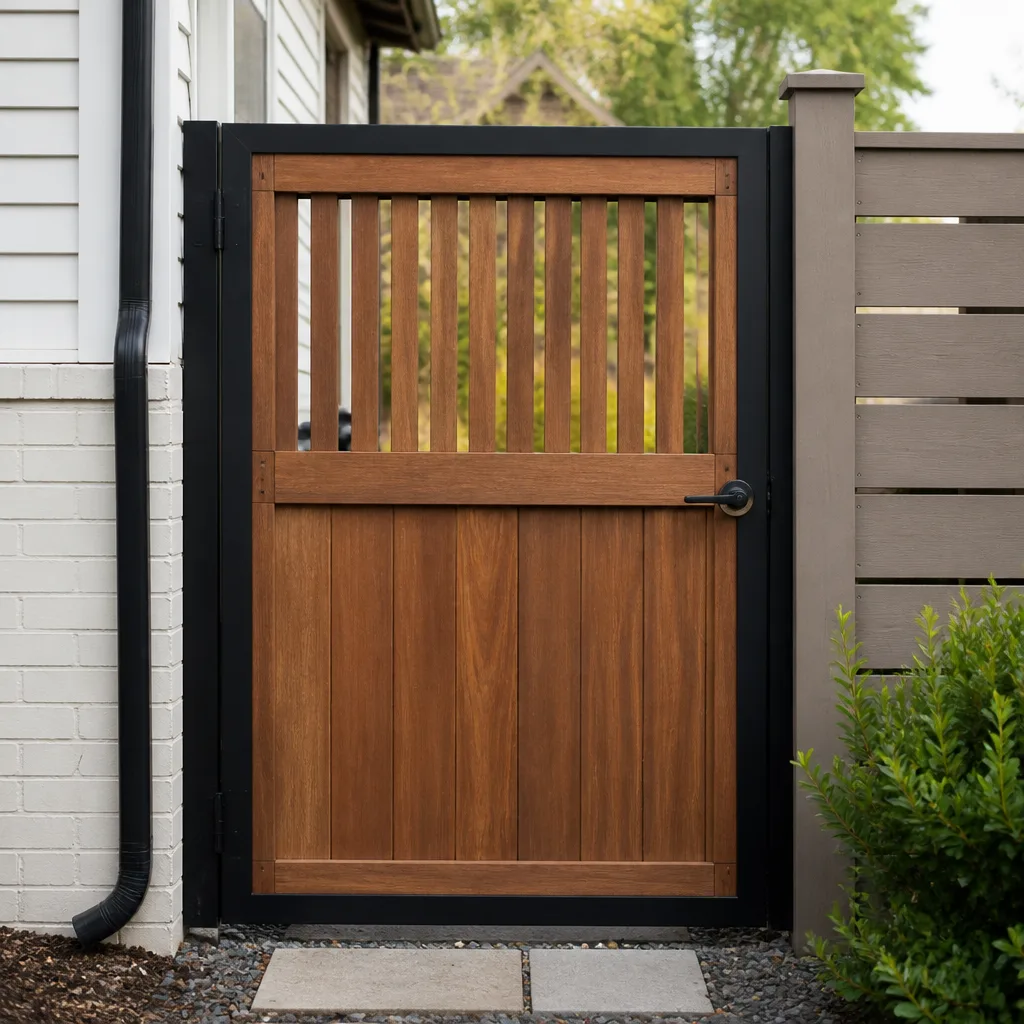 Wood & steel frame
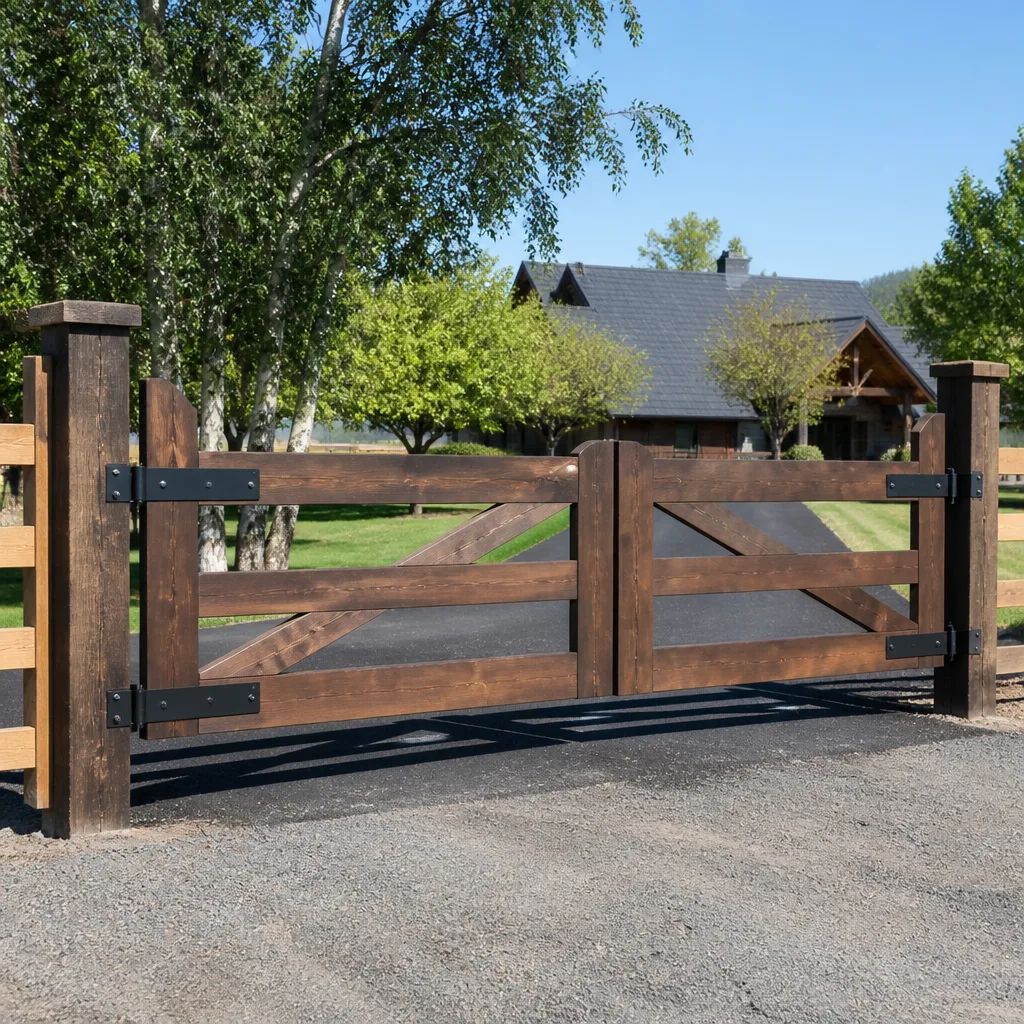 Farm & ranch
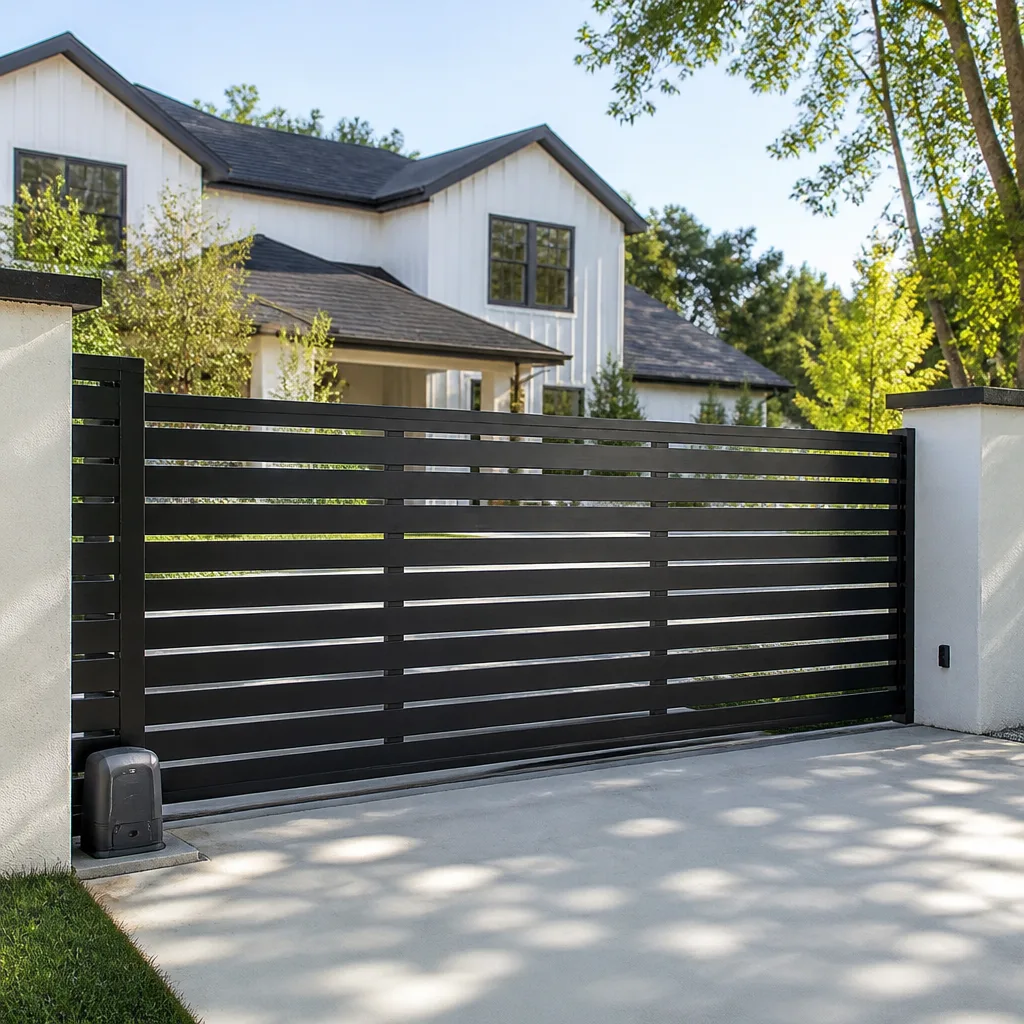 Sliding driveway gates
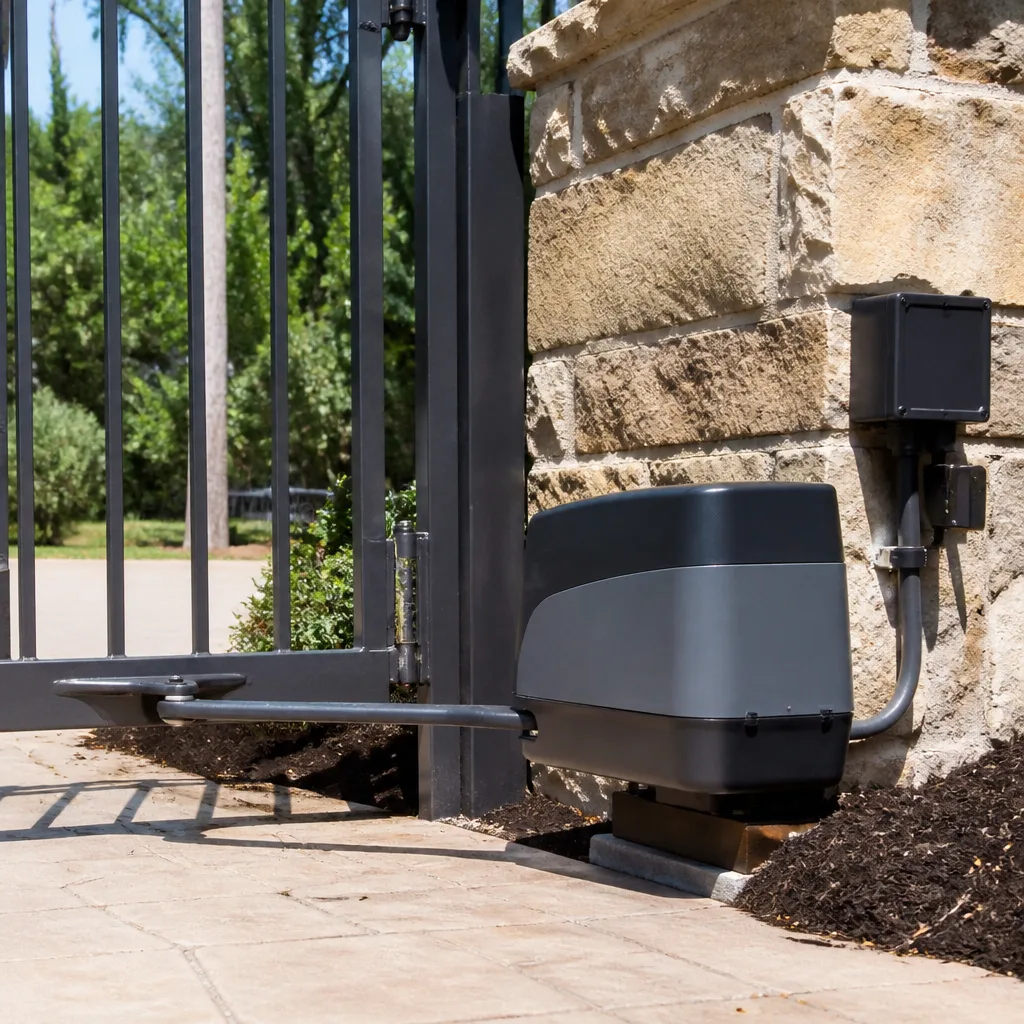 LiftMaster operators
Free on-site gate assessment - hinges, posts, and your LiftMaster or Nice gate operator checked before anything is quoted
The assessment is free and the quote is the invoice.
Get your free estimateGate Repair Emergency Preparedness Guide for Roseville Homes
Most gate emergencies aren’t caused by the gate failing. They’re caused by the owner never having tested the one part built for exactly that moment. During the 2020 North Complex evacuation warnings that reached Placer County, emergency responders documented multiple properties where owners couldn’t manually release their own electric gates. A gate that won’t open when you need to leave is a solvable problem, and solving it takes about fifteen minutes of preparation. This guide covers how to locate and test your manual release, what battery backup really means, how emergency access works with Roseville Fire Department, and the retrofit options that keep your gate working when the grid and the network don’t. Read it once, then put the small actions into practice.
Quick Answer
Every electric gate owner in Roseville should locate and physically test the manual release at least once a year, and know how to open the gate without power or a network connection. If the gate is stuck closed right now, don’t force it – cycle the power at the breaker, check the operator’s fault code, and use the manual release only as the operator’s instructions describe. A dedicated gate technician can confirm the release works, check battery backup health, and quote any repair in writing before work starts.
Styles & brands we work with
- Wrought iron
- Wood & steel frame
- Farm & ranch
- Sliding driveway gates
- LiftMaster operators
Table of Contents
- How Do You Locate and Test Your Gate Operator’s Manual Release?
- What Does Battery Backup Actually Mean for a Gate?
- How Does Roseville Fire Department Get Through an Electrically Locked Gate?
- What Do You Do When the Gate Is Stuck Closed and the Power Is Out?
- How Do You Set Up a Key Switch or Keypad Bypass That Works Without Power?
- What Should an Annual Gate Emergency Test Cover?
- When Is It Time to Repair vs. Replace a Gate System?
How Do You Locate and Test Your Gate Operator’s Manual Release?
The manual release is the mechanism that disconnects the gate from the operator’s motor so you can swing or slide it by hand. On most residential operators it’s a lever, a keyed handle, or a pull cord, usually on the operator housing or the gate’s frame near the drive. Finding it takes a minute. Knowing it works takes a little more attention – and that’s where most homeowners stop short.
If you’ve never done it, do this once and write down what you find:
- Switch the operator off at the breaker or the on-unit disconnect, so the gate can’t try to move while you’re working near it.
- Locate the release. Read the operator’s manual or the label inside the housing – don’t guess by tugging.
- Operate the release as the manufacturer describes. On many slide operators it involves a key and a lever; on swing operators a manual arm or handle.
- Move the gate by hand through its full travel. It should move without grinding, catching, or needing real force.
- Re-engage the release and restore power. Watch that the operator re-learns its limits or, on older units, that the gate cycles normally.
If the gate won’t move by hand after release, or the release won’t engage again, stop there and get it looked at. A seized release is the same as having no release at all. We work on your brand – Linear, Viking, Ghost Controls, DoorKing and others – and the release mechanism varies enough between them that the label matters. In our experience, the majority of homes we visit have never tested theirs. Roseville’s mild winters mean gates stay in service year-round, which is good for the system but also means a stuck release can quietly go unnoticed for years.
What Does Battery Backup Actually Mean for a Gate?
Battery backup on a gate operator does not mean “works normally when the power’s out.” It means “runs a limited number of cycles on stored power, and then stops.” That distinction catches people out every time. A gate that opened fine on backup during a brief outage last month may open once or twice today and then strand you.
What the backup actually covers depends on the operator and the battery condition:
- Cycle count. Backup batteries are rated for a limited number of open/close cycles, not a period of time. Older or tired batteries deliver far fewer cycles than when they were new.
- Battery age and health. Lead-acid backup batteries degrade quietly. A battery that reads full on a meter can still fail under load.
- What’s drawing power. Safety edges, loop detectors, keypads, and access control all pull from the system. More connected devices means fewer cycles from the same battery.
- Charging. Some operators trickle-charge the backup correctly; some don’t, especially after a power event resets the controller. Check that the operator reports a charged battery.
Here’s the practical test: with the operator’s breaker off, count how many cycles your gate completes before it stops. That’s your real backup capacity. If it’s one or two, plan around that now rather than discovering it during an evacuation warning. If your operator has a battery health indicator or fault code, check it. And if it doesn’t have backup at all, that’s a conversation worth having with a technician – it’s a routine upgrade on many systems and often cheaper than people expect.
How Does Roseville Fire Department Get Through an Electrically Locked Gate?
Fire crews can force a gate when life safety requires it – that’s their job, and no gate stops them. What they’d rather do is get through cleanly. On an electrically locked or automated gate, that requires the homeowner to have set things up properly, and there are limits to what a responding crew can do at 2 a.m. on a property they’ve never seen.
What crews need from you, in general terms:
- A visible, operable manual release. If the release is hidden, seized, or requires a tool nobody has, access gets expensive fast – for you.
- Clear access labeling. A key switch or access point that’s obvious and weatherproof, not buried behind landscaping.
- Gate that fails safe, not fails closed, where the code allows it. Some operators support fail-open behavior on power loss. That’s a design decision and, depending on your gate and local requirements, one worth discussing with a qualified technician.
- Permits handled correctly if you change access hardware. Most cities require a permit for gate and access-control changes, so ask your city’s building department before you rewire anything.
If your property has an HOA-managed gate on the way in, the HOA is the one who has to provide emergency access instructions and a working override. HOA managers should treat this as part of fire readiness, not a maintenance afterthought. We’ve worked with property managers across Roseville on exactly this check, and the ones who’ve done it sleep better.
What Do You Do When the Gate Is Stuck Closed and the Power Is Out?
First: don’t force it. A stuck gate is usually one of a few things – no power, a tripped breaker, a fault at the control board, a dead backup battery, or a release that hasn’t been operated. Work through this sequence calmly, in order, and you’ll usually find the answer in a couple of minutes.
- Confirm the power situation. Check the breaker feeding the operator and the on-unit disconnect. If the whole house is out, go to step 3.
- Look at the operator’s status. Fault codes, LEDs, and error displays tell you a lot. Note what you see before you touch anything.
- Try the manual release as the manufacturer describes. If the gate moves freely by hand after you operate it, you can open it manually and proceed.
- If the release won’t operate, stop. Forcing a locked release or pushing a slide gate off its track can damage the operator, the gate, or you. Heavy panels carry real crush risk – this is not a job to improvise.
- Call for help. A trained technician can diagnose a stuck release, a dead battery, and a control board fault without making it worse. We answer 24/7, and a call outside dispatch hours is booked into the next opening, Sunday through Friday, 7am to 7pm.
Slide gates that have come off the track or out of their guides need hands-on attention. A gate that leans means the posts or hardware have moved, and that’s a repair, not a reset. Don’t try to walk the gate back on yourself if it’s heavy – the injury risk outweighs the delay of calling a pro.
How Do You Set Up a Key Switch or Keypad Bypass That Works Without Power?
A key switch is a mechanical override that lets someone open the gate with a physical key, no network, no app, no power to the controller. It’s the simplest and most dependable emergency access tool available, and it’s a worthwhile retrofit on almost any electric gate. Many operators support adding one, including Linear, DoorKing, and others in the brand lineup we work with.
What a retrofit involves, in outline:
- Choosing a key switch rating that matches the operator and its wiring, so the switch can actually command the gate.
- Wiring it into the operator in a way that’s weather-rated and code-correct. This is where it should be done by someone who knows gate systems rather than a general electrician.
- Confirming the switch works when the operator has power, and that the manual release handles the no-power case.
- Documenting the key’s location for every household member and for whoever manages the property.
Keypads are a useful complement but a weaker backup. Battery-powered keypads work without grid power, but a keypad wired into a network or an access-control system fails when the network or controller does. If emergency access is the goal, the key switch is the layer that survives every scenario. We can quote a measure and written price for a retrofit – this is scheduled work, not a same-day fix, so plan it in rather than waiting for a failure.
What Should an Annual Gate Emergency Test Cover?
Once a year, walk the gate through a full emergency scenario. It takes fifteen to thirty minutes and tells you everything you need to know about whether the gate will work for you when the worst happens. Do it on a day when you’re not in a hurry, and put a note on the calendar for the same week each year.
A complete annual test looks like this:
- Locate and operate the manual release. Move the gate by hand through its full travel, re-engage, restore power, and confirm normal operation.
- Test battery backup capacity. With the operator on backup, cycle the gate and note how many operations it delivers before stopping.
- Check key switch and keypad. Operate the key switch with the key you keep on hand, and confirm the keypad commands the gate without the app.
- Inspect the gate itself. Look at hinges, rollers, track, posts and the operator’s wiring. Anything loose, corroded, or visibly cracked is a repair item.
- Check for fault conditions. If the operator displays codes, look them up or have a tech check them.
- Review access info with everyone in the household. Where the release is, where the keys are, who to call.
Roseville’s climate is mild, but Placer County’s fire season makes access readiness a seasonal concern as well as an annual one. Do the full test once a year, and a quick release check at the start of fire season. For a broader look at gate care across the year, our Gate Repair Roseville hub is the place to start. For energy and emergency considerations specific to the area, see Roseville.
When Is It Time to Repair vs. Replace a Gate System?
Most gate emergencies are repairable. A dead backup battery, a seized release, a blown control board, or a track out of alignment are all fixable, and the right fix for the existing system is usually cheaper than replacement. Replacement makes sense when the operator has reached the end of its service life, when parts for it are no longer available, or when the gate itself is structurally compromised.
Practical guidance on the decision:
- Repair if the gate swings or slides straight, the posts are stable, and the failure is in the operator, the wiring, the battery, or a component.
- Repair if the system is a mainstream operator with available parts – the brands we work on, including Ghost Controls, Viking, Linear and DoorKing, are routine repair work.
- Consider replacement if the operator has repeatedly failed, if parts aren’t available, or if the gate itself is out of square or heavily corroded.
- Consider an upgrade if you’re missing safety edges, a key switch, or battery backup – often a smaller job than a full replacement.
For anything electric – the operator, control board, wiring, receivers, and motor – our electric gate repair team handles diagnostics and repairs across the nine brands we work on. And for the basic mechanical end of it, hinges, alignment, and hardware, our gate repair service covers it. Every job is quoted and agreed in writing before any work starts, so you know the number before we begin.
Common Mistakes to Avoid
- Waiting for the failure to test the release. The manual release is the one component you should test before you need it, not during an evacuation warning. Put it on the calendar and actually do it.
- Assuming backup power means “unlimited.” Battery backup is a limited cycle count, and an aging battery quietly drops below a useful number. Test capacity, don’t assume it.
- Forcing a stuck gate to prove a point. Heavy gate panels can crush, slide gates can come off the track, and seized releases can break. If it won’t move by hand after release, call a technician.
- Relying on a network keypad as your emergency plan. An app or networked keypad fails when the network does. A mechanical key switch is the layer that always works.
- Skipping the permit on an access-control change. Most cities require a permit when you alter gate hardware or wiring. Ask your city’s building department before you change anything that ties into the operator.
- Leaving HOA emergency access to chance. HOA-managed gates need a documented, tested emergency access plan, and the HOA manager owns that – not the responding fire crew.
- Handing an electric gate repair to a generalist. Control board, wiring, and receiver work is specialty work. A gate specialist is faster and safer than a general electrician who’s never opened one.
See the difference
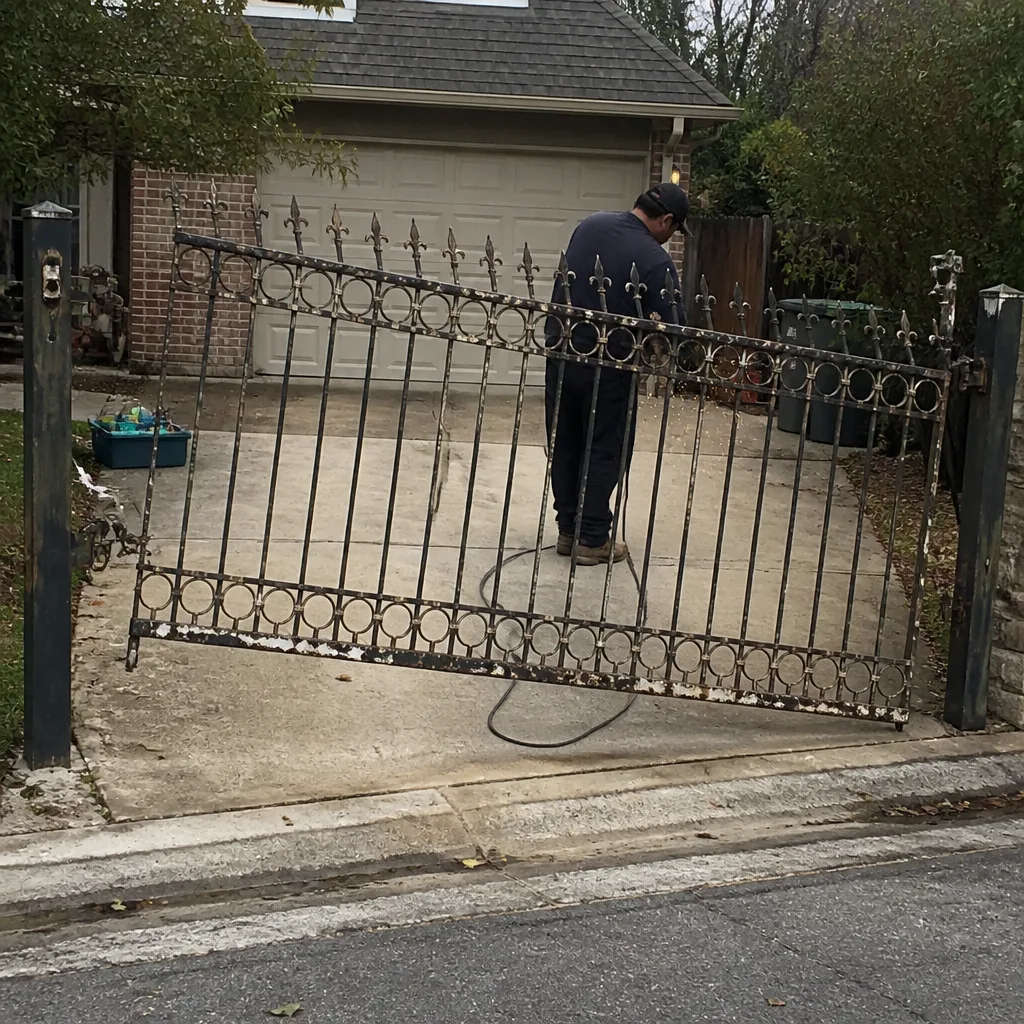 Before
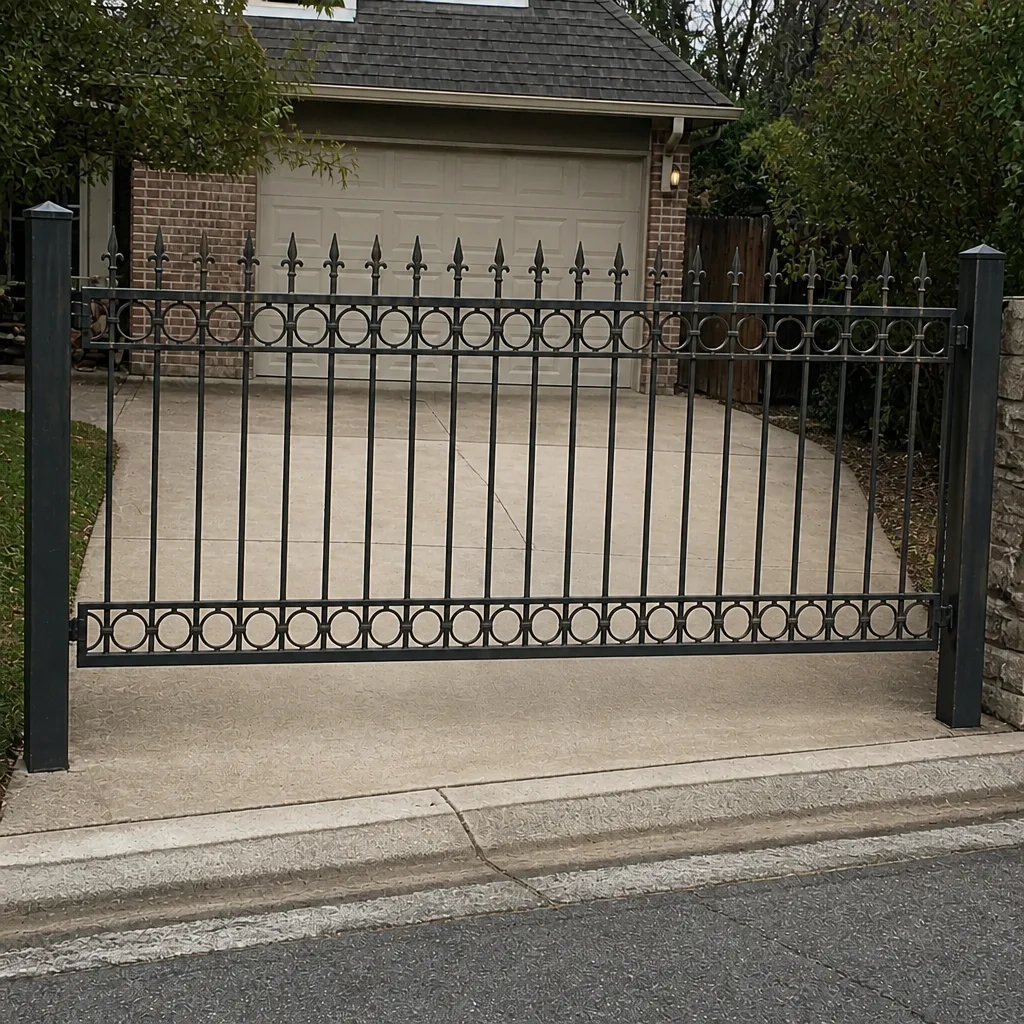 After
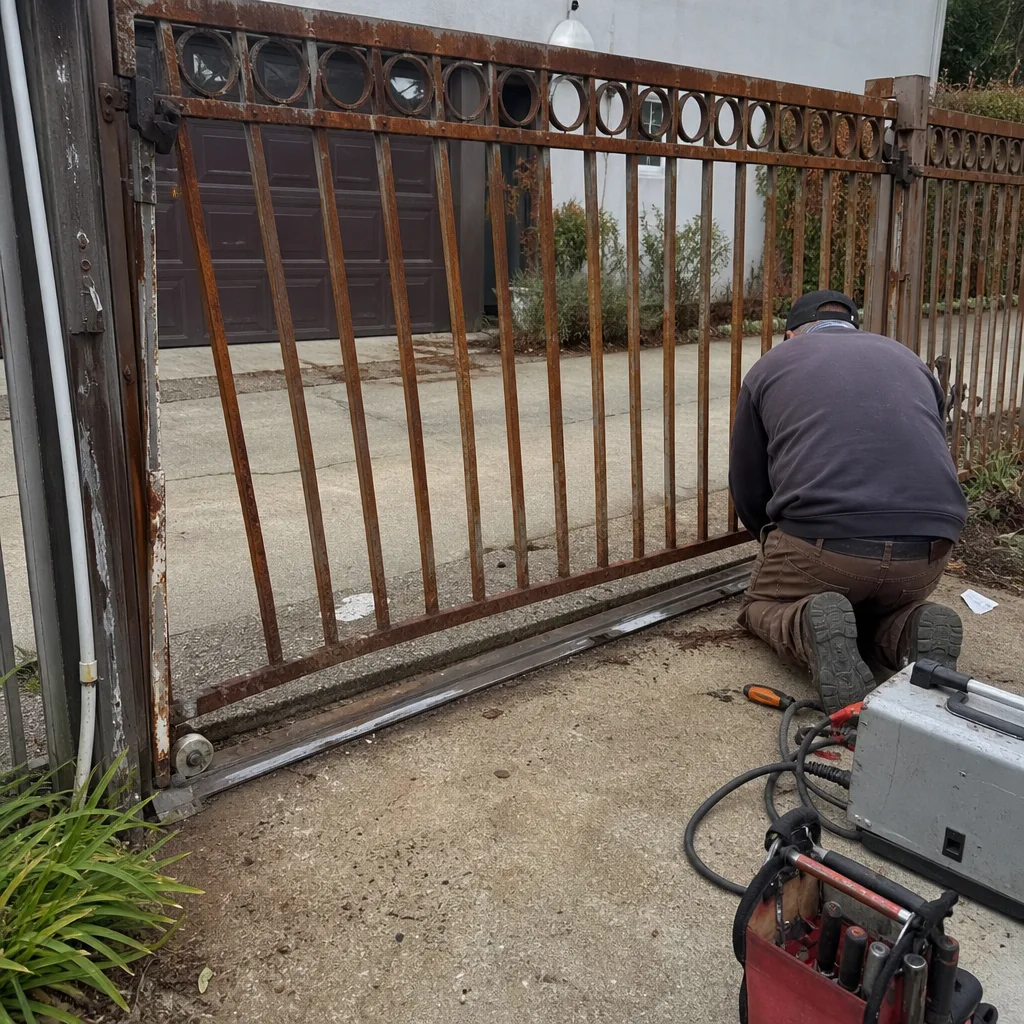 Before
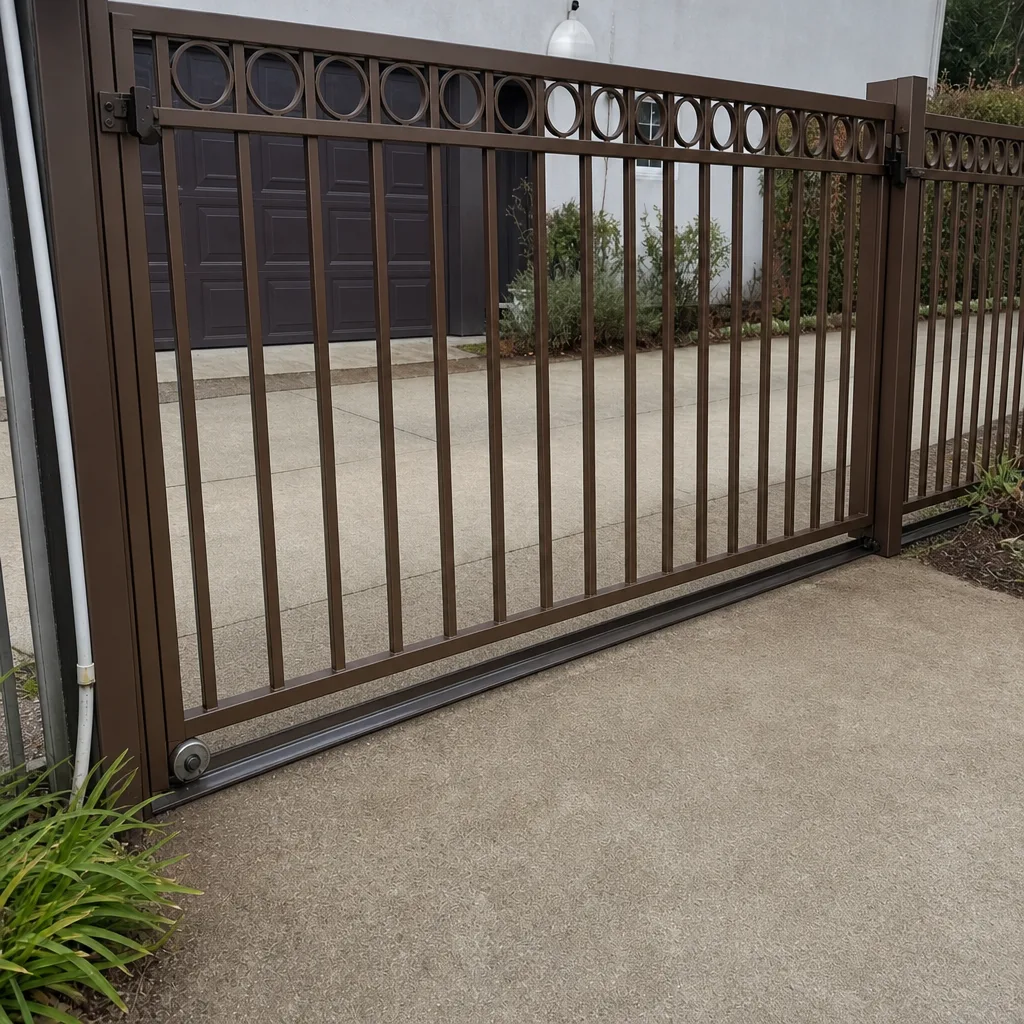 After
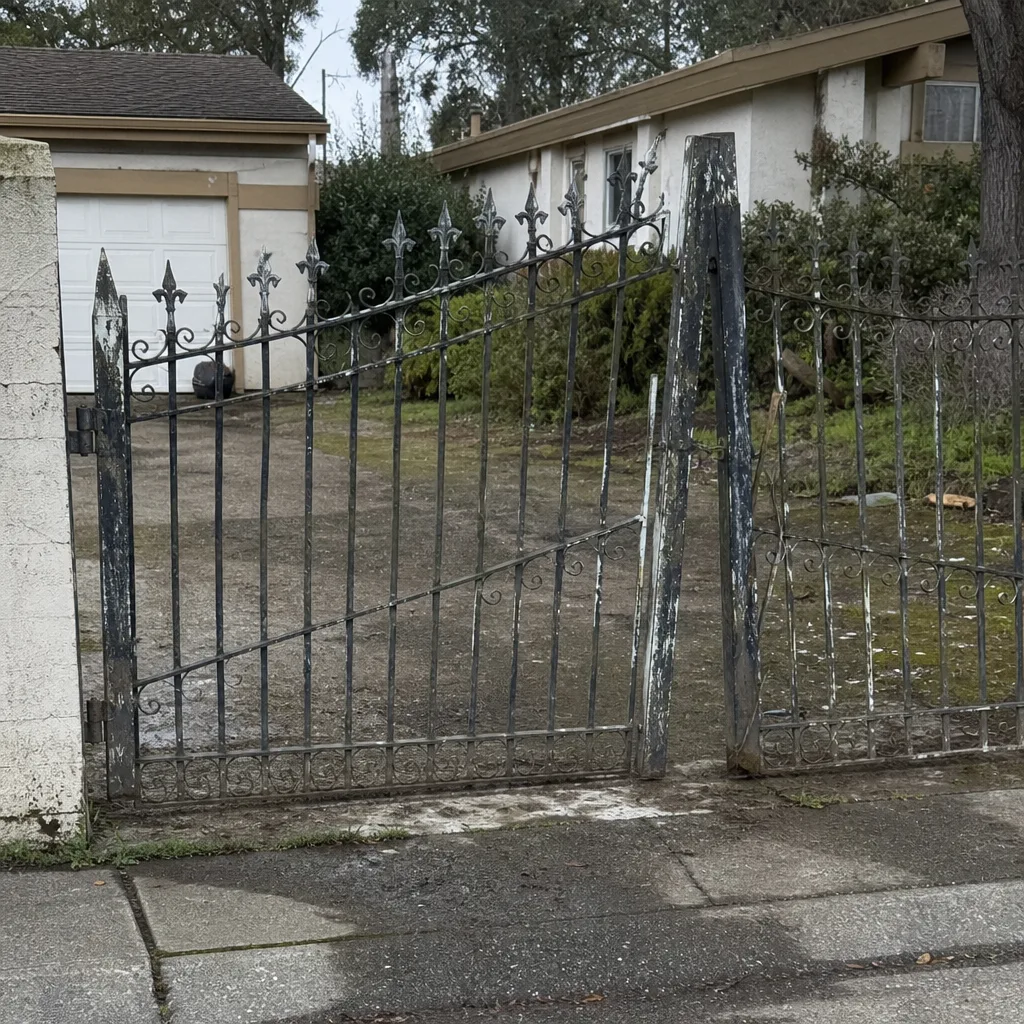 Before
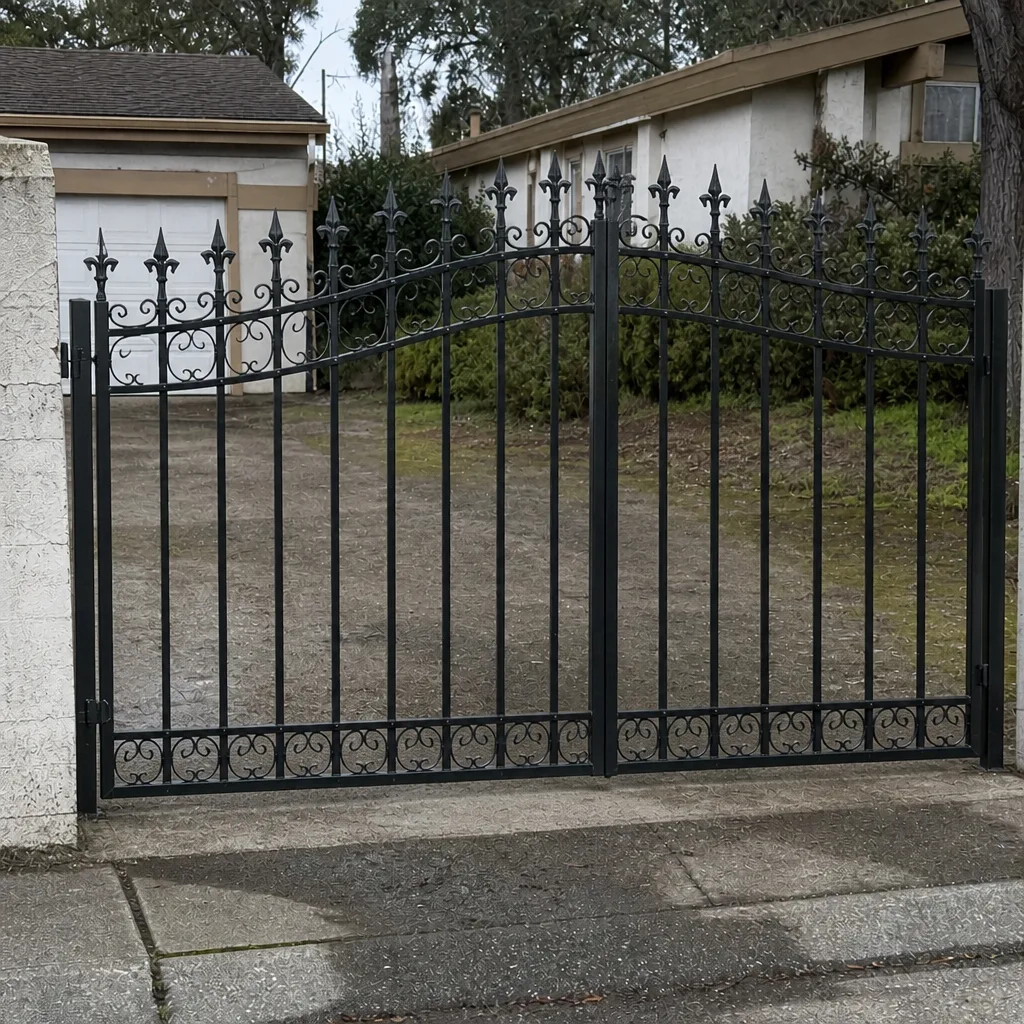 After
When to Call a Professional
Call a gate specialist when the manual release won’t operate or won’t re-engage, when battery backup delivers fewer cycles than you need, when the gate is stuck closed and you’ve worked through the reset sequence without success, when the gate has come off its track or is leaning, or when you’re planning a key-switch or access-control retrofit. These are the situations where a trained eye saves you time, money, and risk. Gate Repair Roseville offers free estimates in Roseville – call (855) 431-0356. We answer 24/7. Fast dispatch from 7am to 7pm, Sunday through Friday. Every repair is quoted in writing before any work begins, and every estimate is free. Whether your system is electric or manual, we diagnose it right, from control board to concrete post.
Frequently Asked Questions
There’s no single number – the cost depends on what failed. A dead backup battery, a seized manual release, and a failed control board are very different jobs, and the written estimate is what sets the final price. We quote and agree the price before any work starts, so you know the number before we begin. Call (855) 431-0356 for a free estimate.
Often yes – we keep fast dispatch from 7am to 7pm and can usually get a technician out same day for a stuck gate in Roseville. We answer 24/7; a call outside dispatch hours is booked into the next opening, Sunday through Friday, 7am to 7pm. Call (855) 431-0356 and we’ll confirm the earliest slot.
Don’t force the gate. Check the operator’s label or manual for the release location, switch the operator off at the breaker first, and operate the release only as the manufacturer describes. If the release is stuck or you can’t find it, call us – a technician can show you where it is and confirm it works in one visit. Call (855) 431-0356.
Many operators have it, but “backup power” means a limited number of cycles, not unlimited runtime. Test it by cycling the gate on backup and counting operations before it stops – that’s your real capacity. If the battery is old or the operator doesn’t hold a charge, it needs attention. Call (855) 431-0356 for a check.
On many systems, yes – a key switch is a mechanical override that works without power or a network, and it’s a routine retrofit on operators including Linear, DoorKing, and others we work on. It’s scheduled work rather than a same-day fix, and we’ll provide a free measure and written price. Call (855) 431-0356.
We handle the repair and installation side of an HOA gate, including checking that the manual release, key switch, and battery backup are all working. Emergency access instructions are the HOA’s responsibility to document and share with residents and with first responders. Call (855) 431-0356 to schedule a full emergency-access check.
The Bottom Line
A gate stuck closed during an evacuation is a solvable problem – but only if you’ve prepared for it. Locate and test your manual release once a year. Know how many cycles your battery backup actually delivers. Add a mechanical key switch so physical access works without power or a network. And when something fails, don’t force it – call a gate specialist who can diagnose the brand-specific fault and quote the repair in writing before any work starts. In Roseville, where fire season makes access readiness a real concern, those small actions are worth far more than the fifteen minutes they take. Gate Repair Roseville is here when you need us: repairs, electric system work, and new installations, with a gate specialist on every call.
Written by the team at Gate Repair Roseville.