
Last updated November 15, 2026
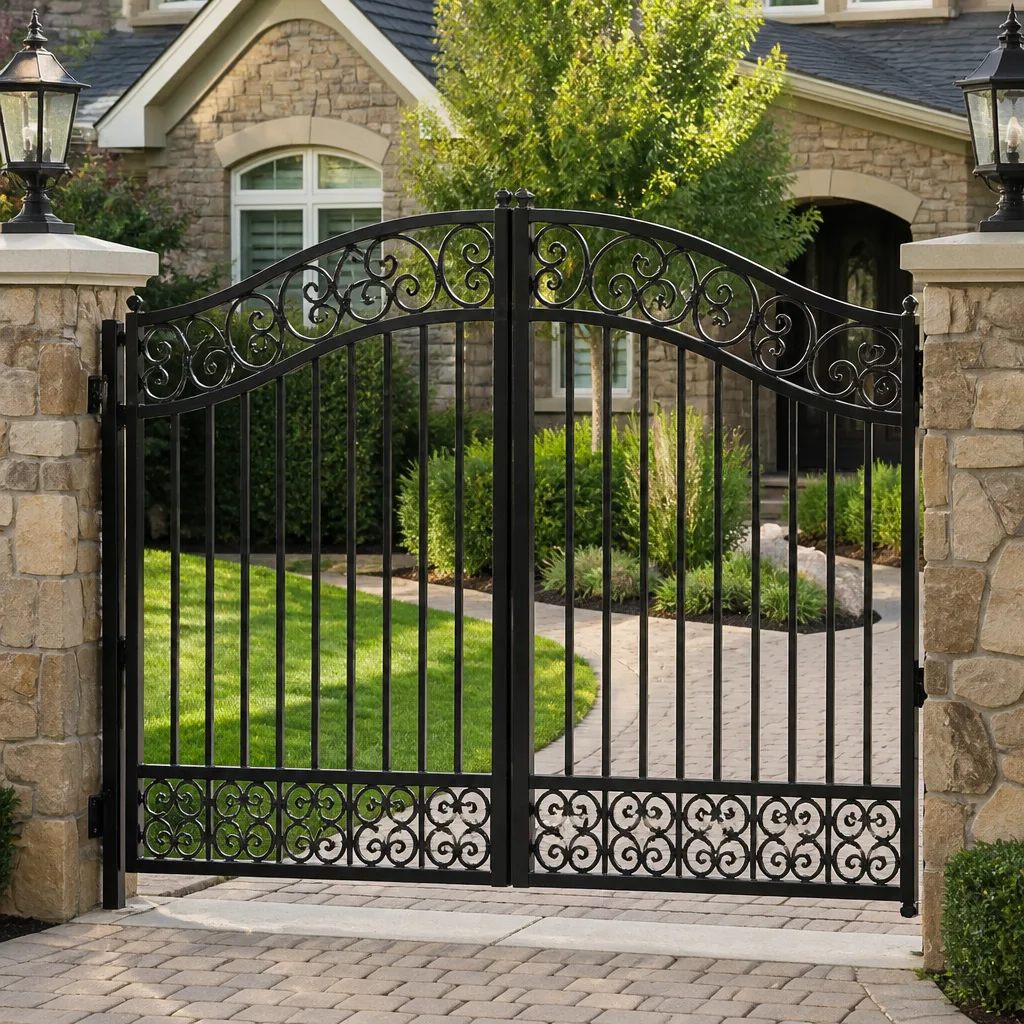 Wrought iron
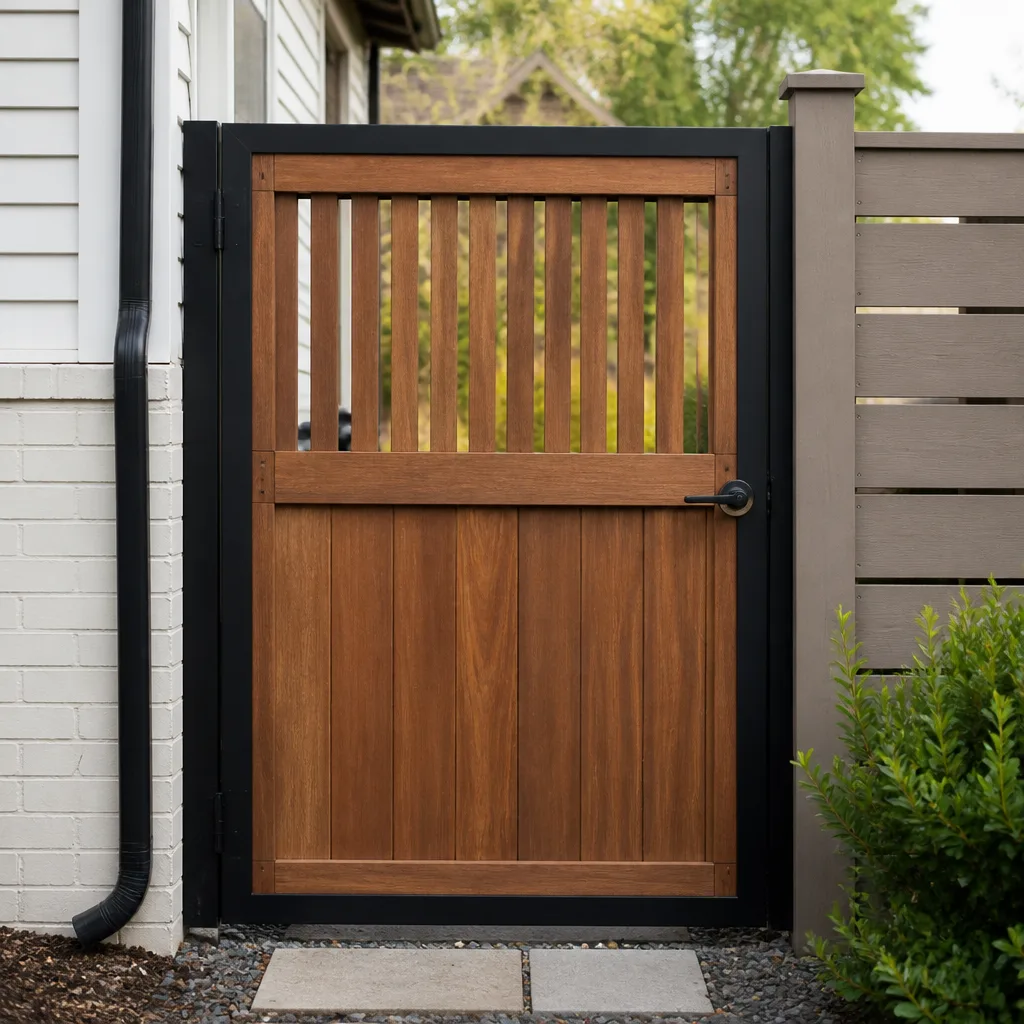 Wood & steel frame
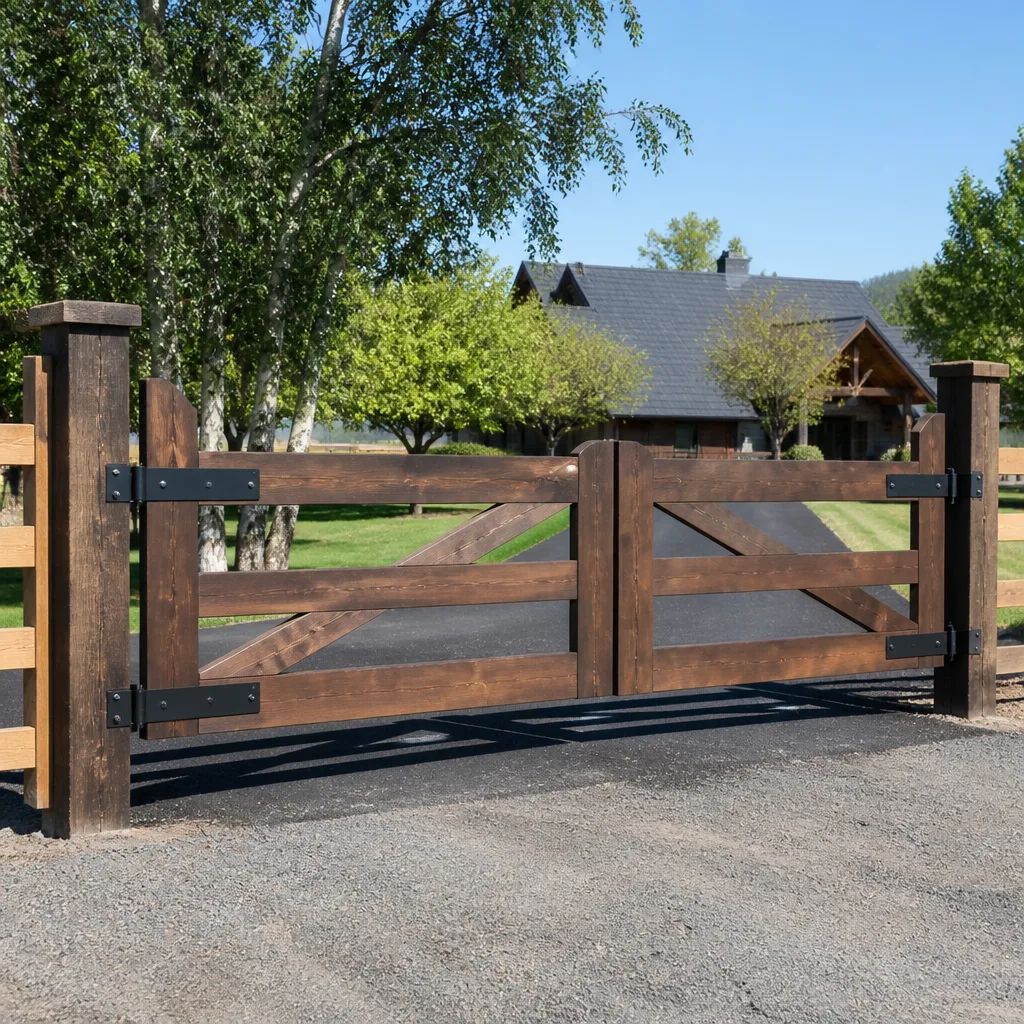 Farm & ranch
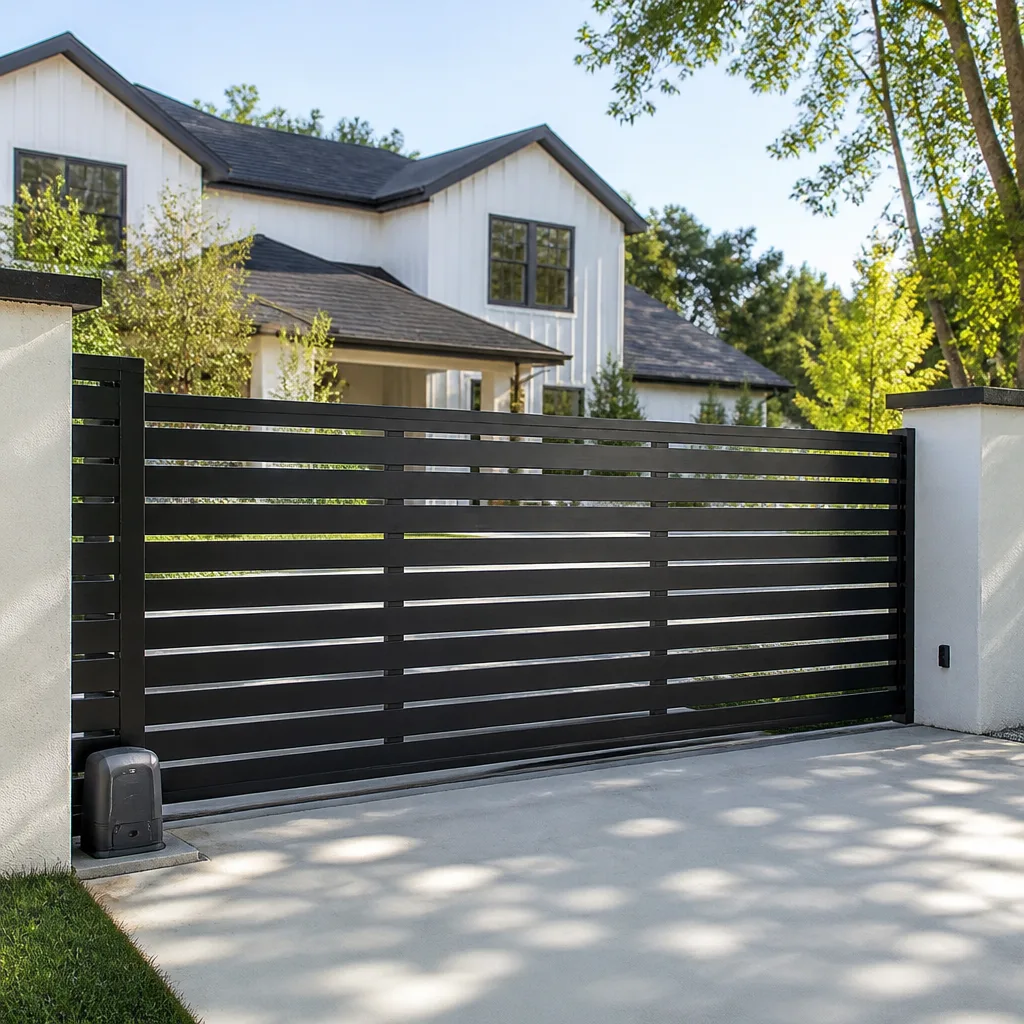 Sliding driveway gates
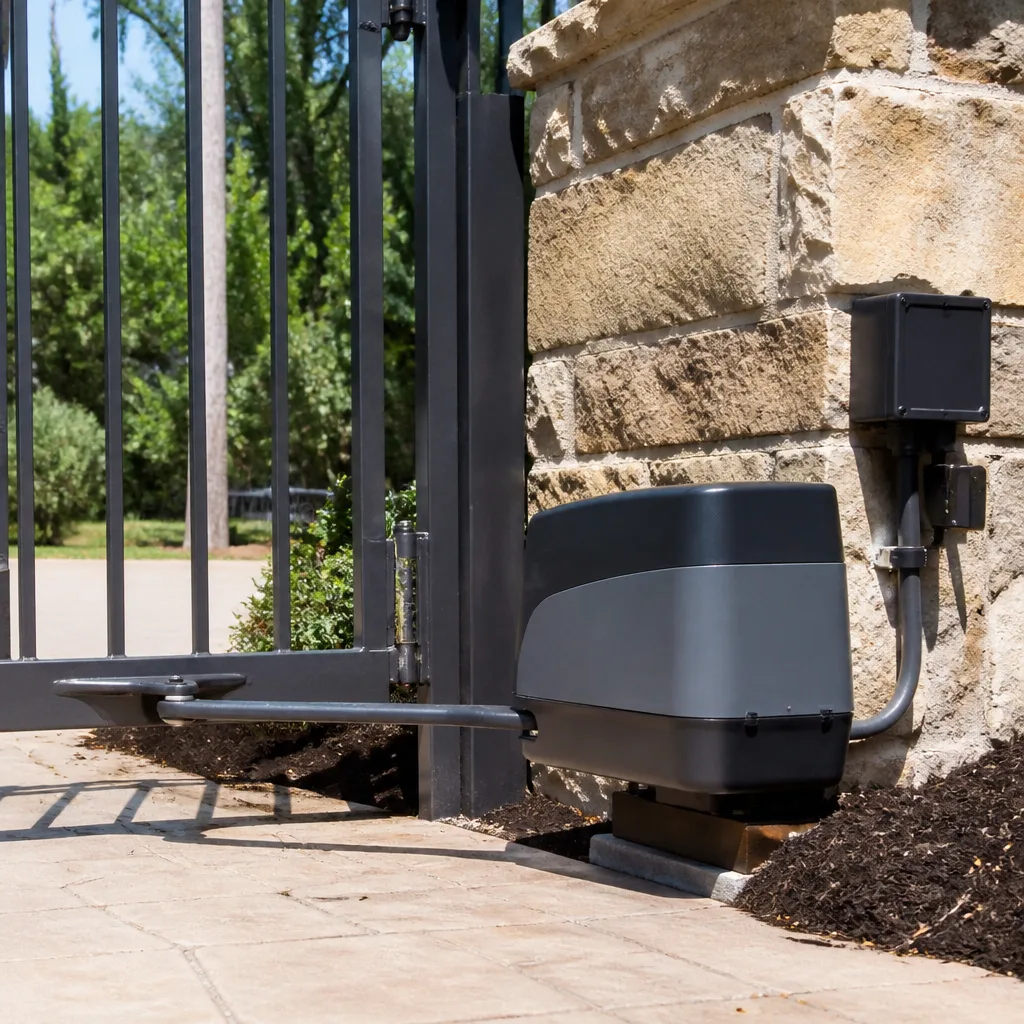 LiftMaster operators
Free on-site gate assessment - hinges, posts, and your LiftMaster or Nice gate operator checked before anything is quoted
The assessment is free and the quote is the invoice.
Get your free estimateGate Repair Cost Breakdown: The Roseville Homeowner’s Reference for 2026
Two homeowners in the same Roseville neighborhood, with the same failed gate operator, can hand you quotes that land several hundred dollars apart. That gap usually isn’t dishonesty on either side. Gate repair pricing here depends on a cluster of variables most contractors never put in writing: how the gate moves, which brand of operator is bolted to it, whether the part is on a shelf or in a distribution center, and how much billable time gets eaten by a gated entry or a sloped lot before anyone touches a wrench. This guide maps each of those variables to realistic price ranges, from a replacement hinge to a failed control board, so you can read any quote for a Roseville gate and know which lines are fair. By the end you’ll understand what drives cost, when to repair and when to replace, and how to spot a number that doesn’t belong in 2026.
Quick Answer
Gate repair in Roseville typically runs from about $150 for a simple hinge or latch fix up to $900 or more for a major operator or control-board replacement, with most electric gate repairs falling between $300 and $700. The single biggest factors are the gate type (sliding, swing, barrier, or vertical pivot), the operator brand and parts availability, and site access. A written estimate after an on-site look is the only number that counts, and it should be agreed before any work begins.
Styles & brands we work with
- Wrought iron
- Wood & steel frame
- Farm & ranch
- Sliding driveway gates
- LiftMaster operators
Table of Contents
- The Cost Matrix: Why the Same Broken Part Costs Different Amounts by Gate Type
- Parts Pricing Reality: Why a Control Board Costs More From a Contractor
- Labor Variables Specific to Roseville
- Repair or Replace Your Operator? Finding the Crossover Point
- What a Diagnostic Fee Covers – and When It Saves You Money
- Electric vs. Manual: Where the Money Goes in Each
- How to Read a Gate Repair Quote
- New Gate Installation Cost Factors
The Cost Matrix: Why the Same Broken Part Costs Different Amounts by Gate Type
A gate operator can fail the same way on four different gates and cost four different amounts to fix. That surprises people, but the operator is only half the job. The gate itself dictates how much labor it takes to reach the failed component, how much it weighs, and how many adjustments are needed to get the gate moving true again. A sliding gate rolls on a track. A swing gate hangs on hinges and must be balanced. A barrier arm is light and fast. A vertical pivot is the most unusual and the least forgiving of a poor adjustment. When a homeowner in a Roseville community calls about a gate that quit, the gate type tells us the real labor picture before we’ve seen a single wire.
Here’s how the same failed part tends to price out across the four common gate types. These are typical, estimated ranges, and your written estimate is what sets the final price.
| Gate Type | Typical Repair Range | What Adds Labor |
|---|---|---|
| Sliding gate | $250 – $650 | Track and roller alignment, rack-and-pinion timing, gate weight when it must be lifted or shimmed |
| Swing gate | $300 – $800 | Hinge geometry, arm-operator travel adjustment, balancing a heavy leaf, dual-leaf synchronization |
| Barrier arm | $200 – $500 | Arm replacement, fast cycle timing in high-traffic entries, loop-detector wiring |
| Vertical pivot | $350 – $850 | Counterbalance adjustment, tight clearances, fewer off-the-shelf parts to fall back on |
Why does a swing gate cost more than a sliding gate to fix the same operator? Because a swing gate’s failure is rarely just the operator. A leaf that’s out of balance drags on the hinge and overloads the motor, so a good repair corrects both. A sliding gate has its own version: a worn roller or a slightly bent track makes a healthy operator strain, and replacing the board without fixing the track puts you right back where you started. On a barrier arm, the arm itself is the frequent failure, and it’s light and fast to swap. A vertical pivot leaves the least margin, because its movement depends on a carefully tuned counterbalance and a small correction goes a long way in either direction.
Parts Pricing Reality: Why a Control Board Costs More From a Contractor
A control board that lists for around $180 from an online retailer often shows up on a contractor’s estimate closer to $280. Homeowners notice that gap and assume they’re being taken for a ride. Sometimes that suspicion is fair. Most of the time it isn’t, and the difference comes down to what the extra money actually buys: a board that’s been matched to the right operator series, a warranty that runs from the contractor and not just the manufacturer, a return path if the replacement board is defective, and the labor and troubleshooting to make sure the board was the problem and not a symptom of a failing motor or a short in the wiring.
Here’s the honest split between when a markup is legitimate and when it isn’t:
- Legitimate: The contractor sources from a distributor that stocks the correct variant for your operator model, stands behind the part, and covers the swap if it fails inside the warranty window. You’re paying for availability and accountability.
- Legitimate: The board requires programming or a matching receiver, and the price covers getting the whole system talking again rather than just dropping in a component.
- Legitimate: The part is out of stock everywhere and the contractor tracks down the correct replacement from a specialty source. Scarcity is real, and a hard-to-find board for an older system can carry a legitimate premium.
- Worth questioning: A markup of more than double the online list price with no explanation of warranty, sourcing, or why the failing board couldn’t be matched from a standard distributor.
- Worth questioning: A part number on your estimate that doesn’t match your operator’s series. That’s a sign of guesswork, and guesswork is what a brand-aware diagnosis is supposed to replace.
We work with whatever system is already on your property, which means we’re not steering you toward a proprietary board to simplify our own inventory. When we quote a part for a DoorKing or a Ghost Controls system in Roseville, the goal is the right fix for the system you own, not the cheapest part that happens to be in a parts drawer. That matters most at the moment a homeowner is choosing between two quotes and one is significantly lower on parts alone.
Labor Variables Specific to Roseville
Labor is where Roseville quotes really diverge, and where most estimates go light on explanation. Two properties with the same gate and the same failed board can take very different amounts of time to service, and the honest reason lives in access, not in the repair itself. A technician who can pull up, walk in, and reach the operator in two minutes is a different job from one who spends twenty minutes getting through a call box, waiting on a community gate to cycle, or hiking gear up a slope. That time is billable, and a quote that doesn’t account for it either underestimates the job or quietly makes it up elsewhere.
The three factors we see most often in Roseville:
- Gated and shared-entry communities. When the gate being repaired is the only way onto the property, every trip in and out costs time, and any second trip for a part means the same access dance again. A quote that assumes one clean visit can miss real time here.
- Shared-entry commercial gates. On a commercial property or an HOA entrance, repairs have to happen around traffic. Timing the work to minimize disruption, coordinating with property management, and sometimes phasing a repair so the entry stays usable all add to the labor side of the estimate.
- Hillside and sloped properties. Rigging, staging, and moving a heavy gate leaf or a replacement operator across a slope is slower work. It’s not difficult in the abstract, but it’s physical, and it takes time that a flat-lot job doesn’t.
None of that is a reason to avoid a repair. It’s a reason to ask, when you compare quotes, whether the estimate actually accounts for how your specific Roseville property is laid out. A quote that’s silent on access is a quote that may grow once the technician is on site. The best protection is a written estimate agreed before work starts, based on a look at the actual gate and the actual site. If a contractor won’t come out and see your property before pricing the job, that’s your answer about which quote to trust.
If you’re trying to figure out whether your issue is a mechanical problem or an electrical one, a specialist who handles gate repair can usually tell within minutes of arriving. That distinction matters because the two categories carry different labor patterns and different parts paths.
Repair or Replace Your Operator? Finding the Crossover Point
Every electric gate operator reaches a point where keeping it alive costs more than replacing it. The trick is knowing where that line sits, because most homeowners cross it without realizing it and spend money propping up a system that’s already headed for replacement. There’s no universal cutoff, but there’s a pattern worth knowing: the older the operator and the more of its repair cost that’s tied to scarce or discontinued parts, the closer you are to the crossover. When a repair costs a meaningful fraction of a new operator and the unit is already into its later years, replacement usually wins on total dollars spent over the next several years, not just this one.
Here’s how we think through the decision with a homeowner:
- Add up the last few repairs. If you’ve paid for multiple fixes on the same operator within a couple of years, you’re already partway to a replacement budget.
- Check parts availability. A control board that’s discontinued or nearly impossible to source is a loud signal. A contractor who’s fluent across LiftMaster, FAAC, Linear, or Mighty Mule can tell you quickly whether the part you need is still a routine find or a scramble.
- Look at the repair as a share of replacement. When a single repair is a large slice of what a new operator would cost, and the unit is old on top of that, the math favors replacement.
- Consider the motor’s workload. A tired motor on a heavy, poorly balanced gate will keep failing. Fixing the motor without correcting the gate is throwing money at a symptom.
- Factor in reliability, not just price. A gate that fails repeatedly costs you in time and access on top of the repair bills. At some point reliability itself is worth paying for.
The crossover isn’t a single number anyone can quote you without looking at your system. It depends on your gate, your operator’s condition, and whether the parts it needs are common or scarce. What we can tell you is that the decision should be made with the whole picture in view, not quote by quote. That’s the value of a brand-fluent diagnosis: it tells you where your operator actually sits, so the repair-or-replace call is grounded in the system rather than a guess.
What a Diagnostic Fee Covers – and When It Saves You Money
The estimate we provide is free, and the price for the work is set per job by a written estimate after we look at the gate. But you may run into contractors who charge a diagnostic fee, typically somewhere in the range of $75 to $100, and that fee deserves a fair explanation rather than a knee-jerk reaction. A diagnostic fee pays for the technician’s time to actually trace a fault: testing the operator, checking the wiring, reading the control board, and confirming which component failed. On a modern electric gate with multiple possible failure points, that can take real time, and it’s the step that separates a correct repair from a guessed one.
When does a diagnostic fee make sense?
- Intermittent faults. A gate that works most days and fails occasionally is one of the hardest problems to solve. The testing time is the whole job, and a small fee to pin down the cause is often the cheapest money you’ll spend.
- Multiple possible culprits. If the symptoms could come from the control board, the receiver, a safety edge, or the wiring, the diagnosis narrows it down and stops you from paying for parts you didn’t need.
- Second opinions. If you’ve already had one contractor replace a part and the gate still won’t run, a proper diagnostic is worth paying for by itself.
Ask two questions about any diagnostic fee before you agree to it. First, is it waived or applied toward the repair if you go ahead with the work? Many contractors apply it against the final bill because the time is part of solving the job. Second, what does the diagnostic actually include? A fee that buys a real, systematic test of the operator and its wiring is different from a fee that buys a quick glance and a guess. Our approach is to give you a free estimate and a written price, and we make the diagnosis part of getting that number right. If a fault turns out to be genuinely hard to pin down, we’d rather explain the testing time up front than surprise you later.
Electric vs. Manual: Where the Money Goes in Each
Manual gates and electric gates fail in completely different ways, and their repair costs reflect that. A manual gate’s problems are almost all mechanical: hinges that have worn, latches that don’t catch, posts that have settled, a leaf that drags or sags. Those are usually straightforward, parts are inexpensive, and the repair cost is mostly labor. Electric gates carry everything a manual gate does, plus the entire electrical and automated side: the operator motor, the control board, the receiver, the safety edges, and the wiring that ties it all together. That added layer is where the bigger numbers live, and where brand-specific knowledge changes the outcome.
On a manual gate, expect most repairs to land in the lower part of the range, with mechanical fixes like hinge and latch work being the most common. On an electric gate, the cost depends heavily on which electrical component has failed:
- Motor or operator assembly: typically the most expensive single repair, especially on heavy gates.
- Control board: a common failure and one where brand-specific expertise matters most, since board layouts and programming differ widely across manufacturers.
- Receiver or remote issues: often inexpensive, but only after confirming the problem is the receiver and not the board or the wiring.
- Safety edges and sensors: important safety components that must be working correctly, not just bypassed.
- Wiring and connections: the hidden cost in many “the gate just stopped” calls, since a bad connection can imitate a failed board.
This is why we treat electric gate repair as a core specialty rather than an add-on. The electrical side is where a generalist sees a gate that won’t open and starts swapping parts, and where a specialist reads the fault and finds the actual cause. For homeowners in Roseville with an automated gate, the electrical diagnosis is usually the most valuable part of the job. If your gate has gone quiet and you’re not sure whether it’s mechanical or electrical, getting a specialist to electric gate repair early usually costs less than a run of guessed replacements.
How to Read a Gate Repair Quote
A gate repair quote tells you a lot more than a total number if you know what to look for. The best quotes are specific about what’s being done, why, and what it will cost, and they set a clear final price you can rely on before work starts. The weakest quotes are a single number with no breakdown, and those are the ones most likely to change once the technician gets into the job. When you’re comparing estimates for the same failing gate in Roseville, read past the bottom line and check whether each quote actually answers the same questions.
Here’s what a genuinely useful quote includes:
- The failed component, named specifically. “Control board replacement” beats “gate repair.” If the quote can’t name the part, the diagnosis isn’t finished.
- Whether it’s an OEM or aftermarket part. That affects both price and reliability, and you deserve to know which you’re getting.
- The labor line, however brief. Labor is the biggest variable in Roseville, so a quote that hides it isn’t really giving you a number you can evaluate.
- A statement that the price is fixed, per the estimate. The written estimate should set the final price, agreed before work begins.
- Any parts or step that could change the price. If there’s a chance the wiring is also bad, say so in the quote rather than on the invoice.
- What’s covered after the work. A warranty on the part and the labor is a signal of confidence, and it’s worth asking about directly.
The comparison you’re really making isn’t between two totals. It’s between two levels of clarity. A slightly higher quote that fully explains the work and stands behind it is usually the smarter choice over a lower quote that leaves room to grow. That’s the principle behind giving you a free written estimate: the price you see is the price you agree to, before anything gets touched.
New Gate Installation Cost Factors
If your gate has reached the point where a new installation makes more sense than repair, the cost picture shifts entirely. Installation is not a same-day repair, and we don’t price it that way. It’s measured, ordered, and scheduled, because a gate installed to last begins with accurate measurements and the right operator for the gate, not with a part off a truck. Several factors drive the number, and understanding them before you get quotes helps you compare fairly.
What goes into an installation estimate:
- Gate type and size. A sliding gate, a swing gate, and a barrier arm each carry different material and labor profiles, and a heavier or larger gate needs a more capable operator to match.
- Operator and brand. We work across a wide spread of manufacturers, and the right operator is the one that fits your gate and your usage, not the one a contractor happens to prefer.
- Power and access. Getting power to an automated gate and coordinating access for the install are real line items. On an automated system, the power run and the safety edges are part of the job from the start.
- Site conditions. Slopes, tight clearances, and access constraints all affect how the install is staged and how long it takes.
The key thing to understand about installation in Roseville is that every quote should start with a free on-site measure and end with a written price. That’s the way to get a number that reflects your gate and your property. If you’ve been quoted an installation without anyone measuring your gate, ask what that number is based on, and don’t sign until the price is written and agreed.
Common Mistakes to Avoid
- Comparing only the bottom line. Two quotes for the same failure in Roseville can differ by several hundred dollars and still both be honest. The difference lives in labor and parts sourcing. Read the line items, not just the total, or you’ll choose the wrong estimate.
- Bypassing a safety edge to save money. Safety edges and sensors exist to stop a gate closing on a person, a vehicle, or a pet. If a repair involves a failed safety edge, fixing it properly is not the place to cut cost.
- Replacing the operator without fixing the gate. A swing gate that’s out of balance or a sliding gate with a worn roller will wear out a fresh operator too. Correct the gate and the motor together, or you’ll be paying again soon.
- Paying for a part before you know it’s the cause. A board that gets swapped for a bad connection is money gone. A proper diagnosis first, then a written estimate, then the repair.
- Ignoring the access reality of your own property. If your gate is the only way in, or you’re on a slope, a quote that doesn’t mention it may not be accounting for it. Ask how access affects the estimate before you agree.
- Assuming a lower parts price is a better deal. A cheap control board that fails in a year, or isn’t matched to your operator series, costs more than a properly sourced one.
- Letting the estimate stay verbal. A price quoted in conversation can shift. A price on paper, agreed before work starts, can’t.
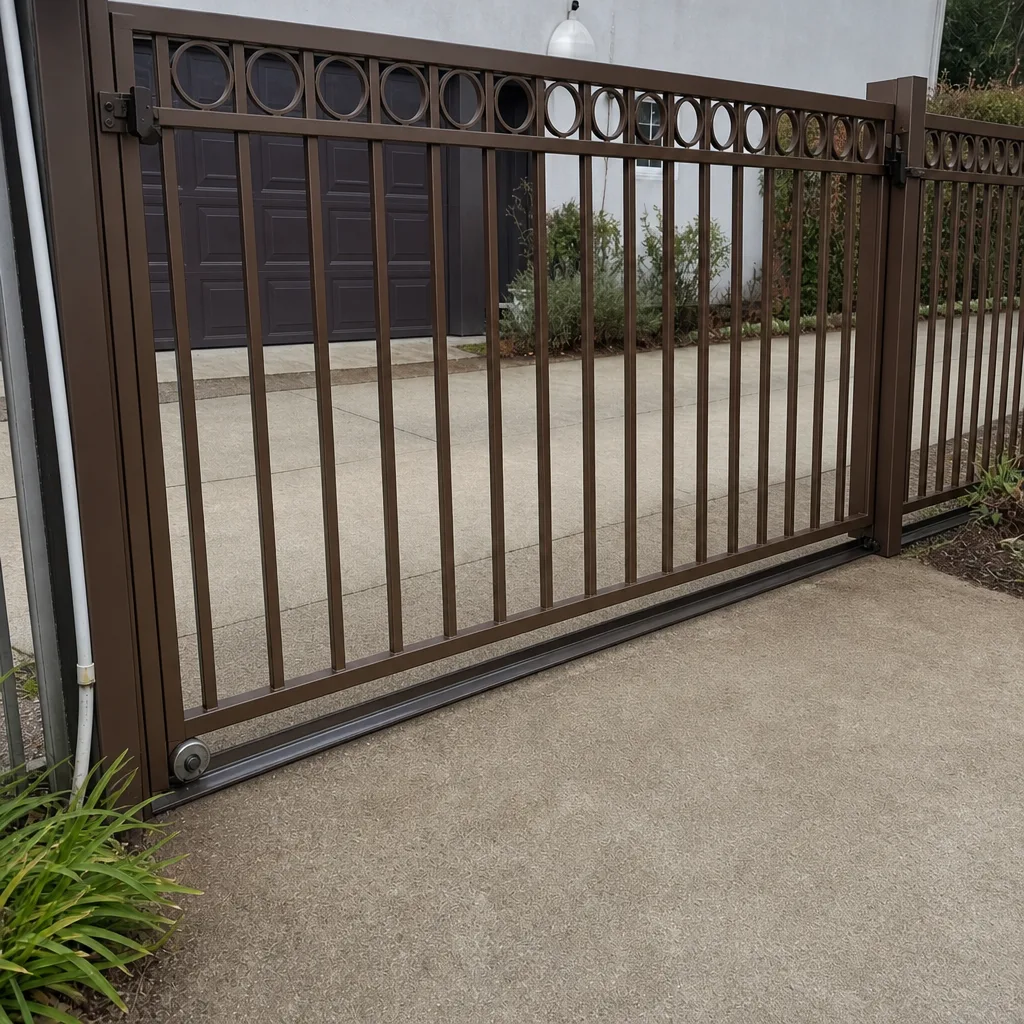
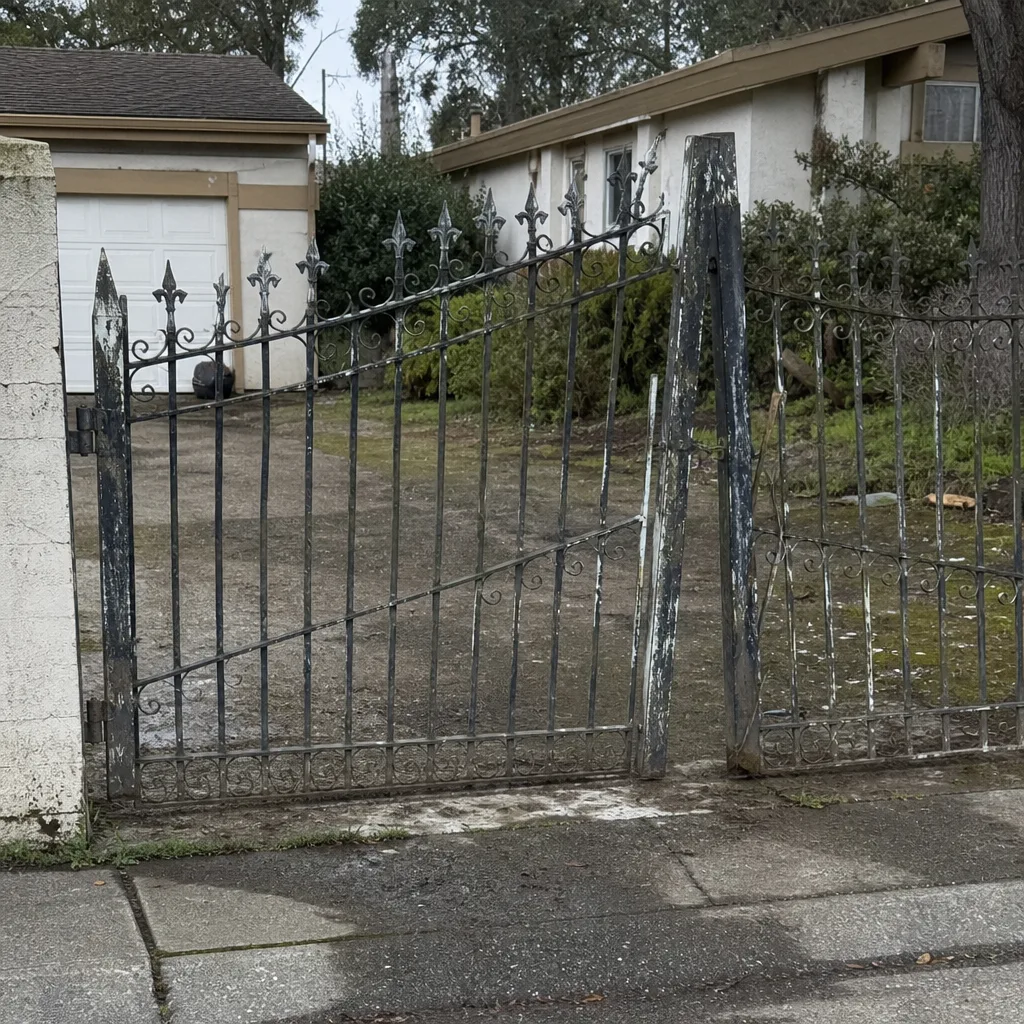
See the difference
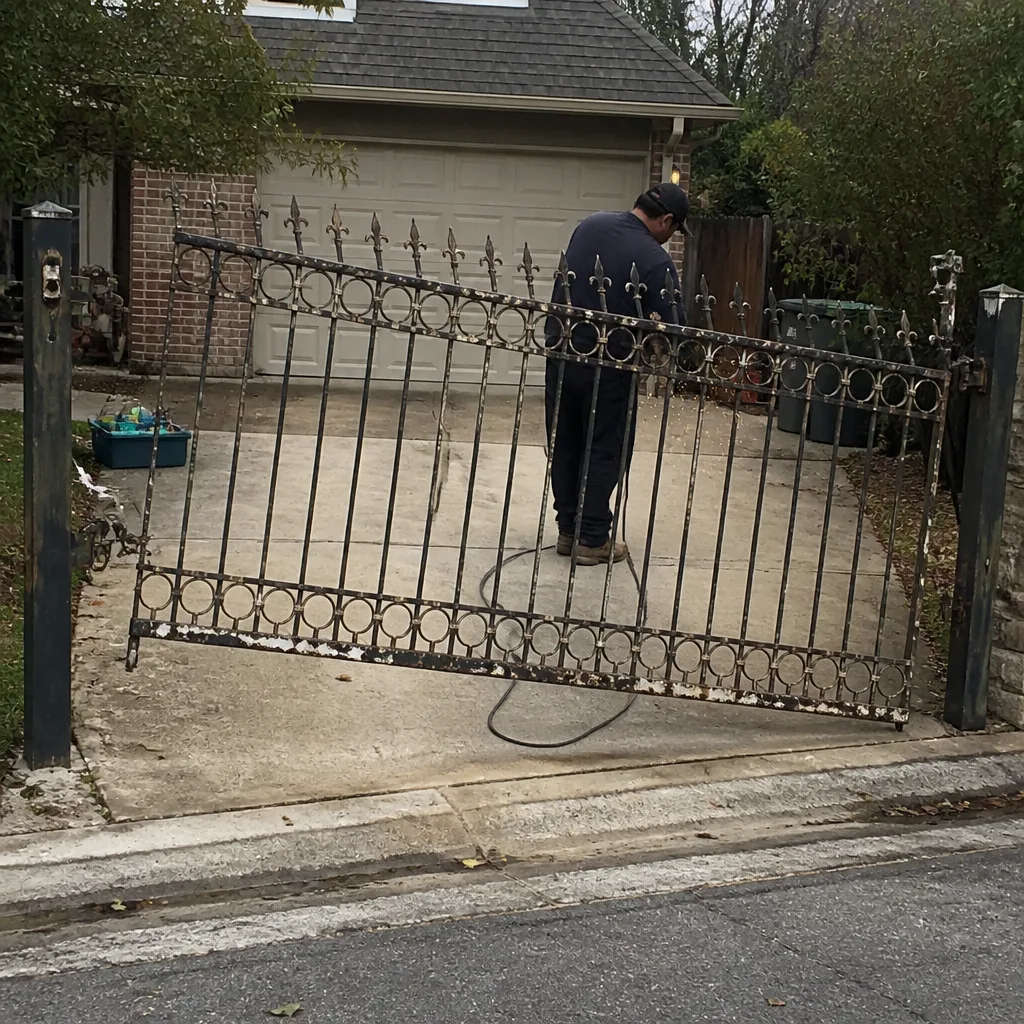 Before
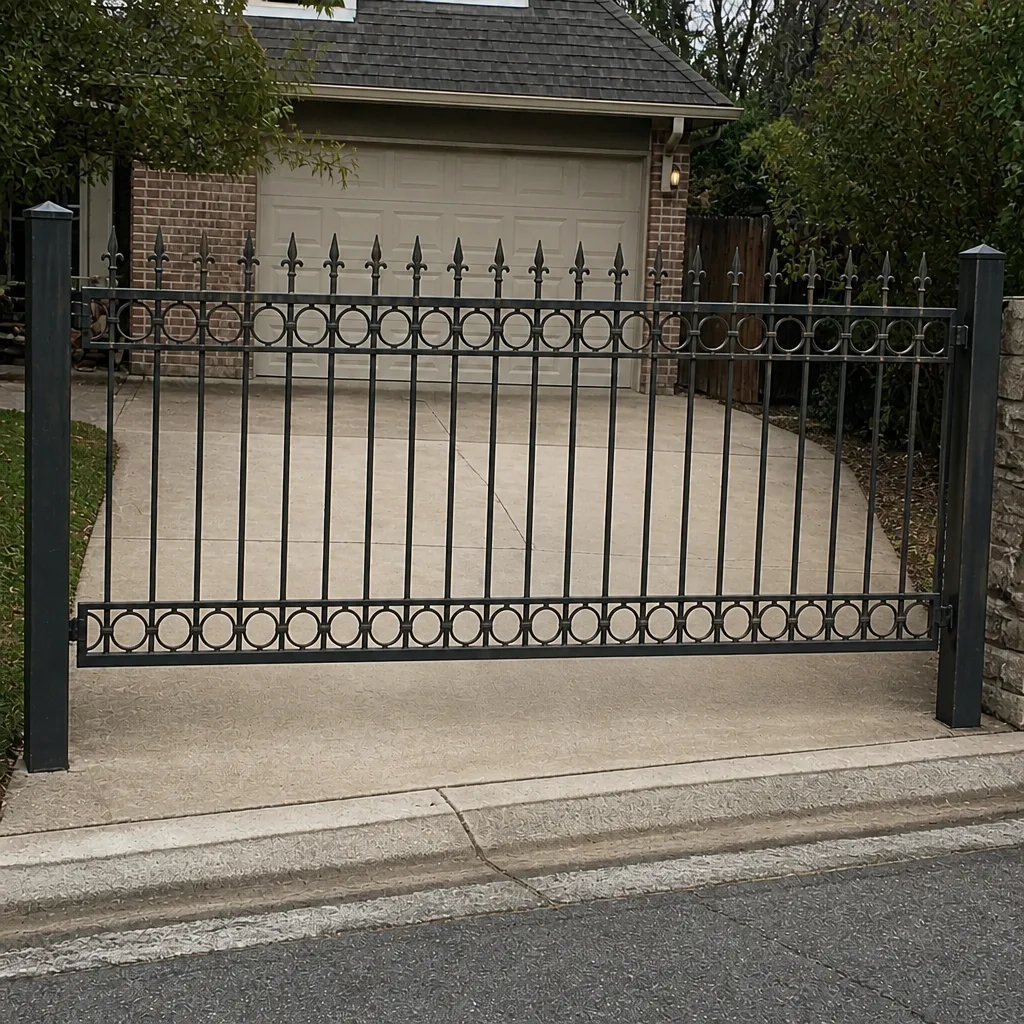 After
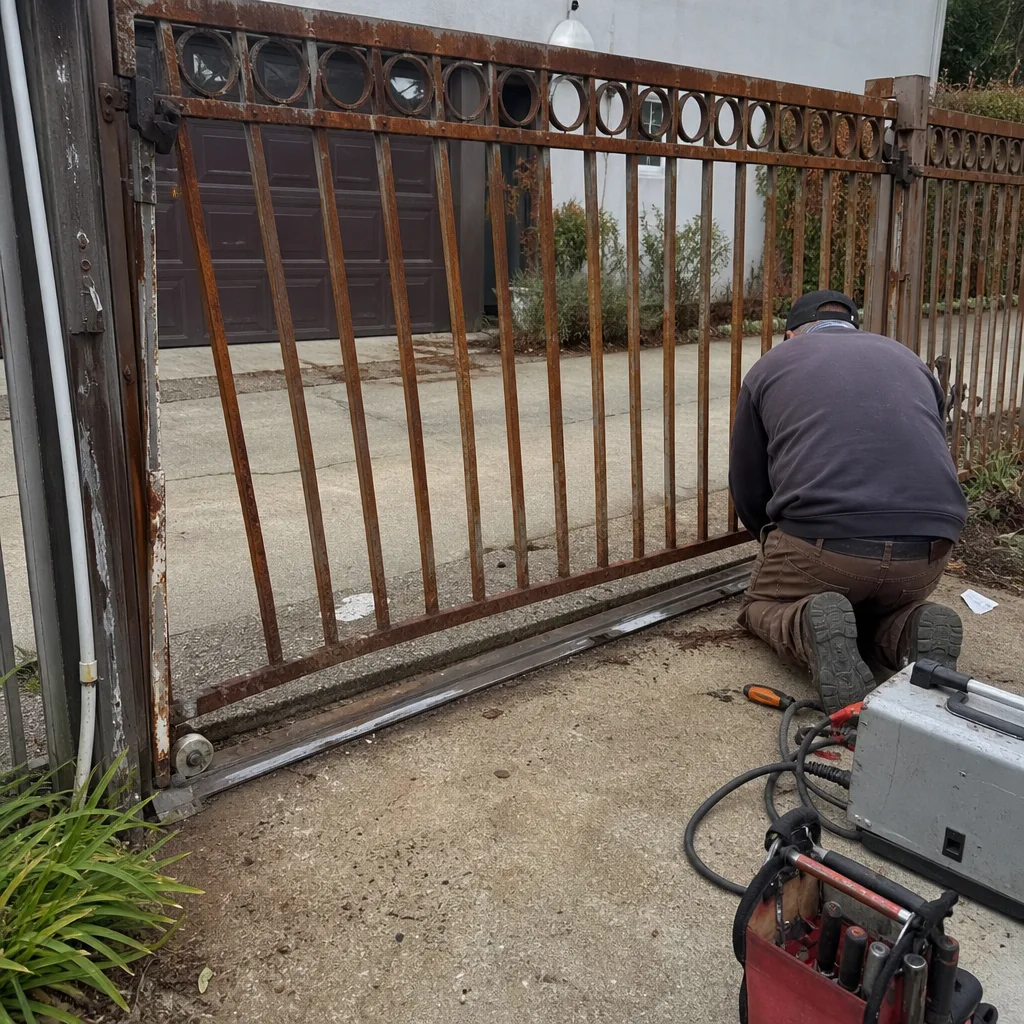 Before
 After
 Before
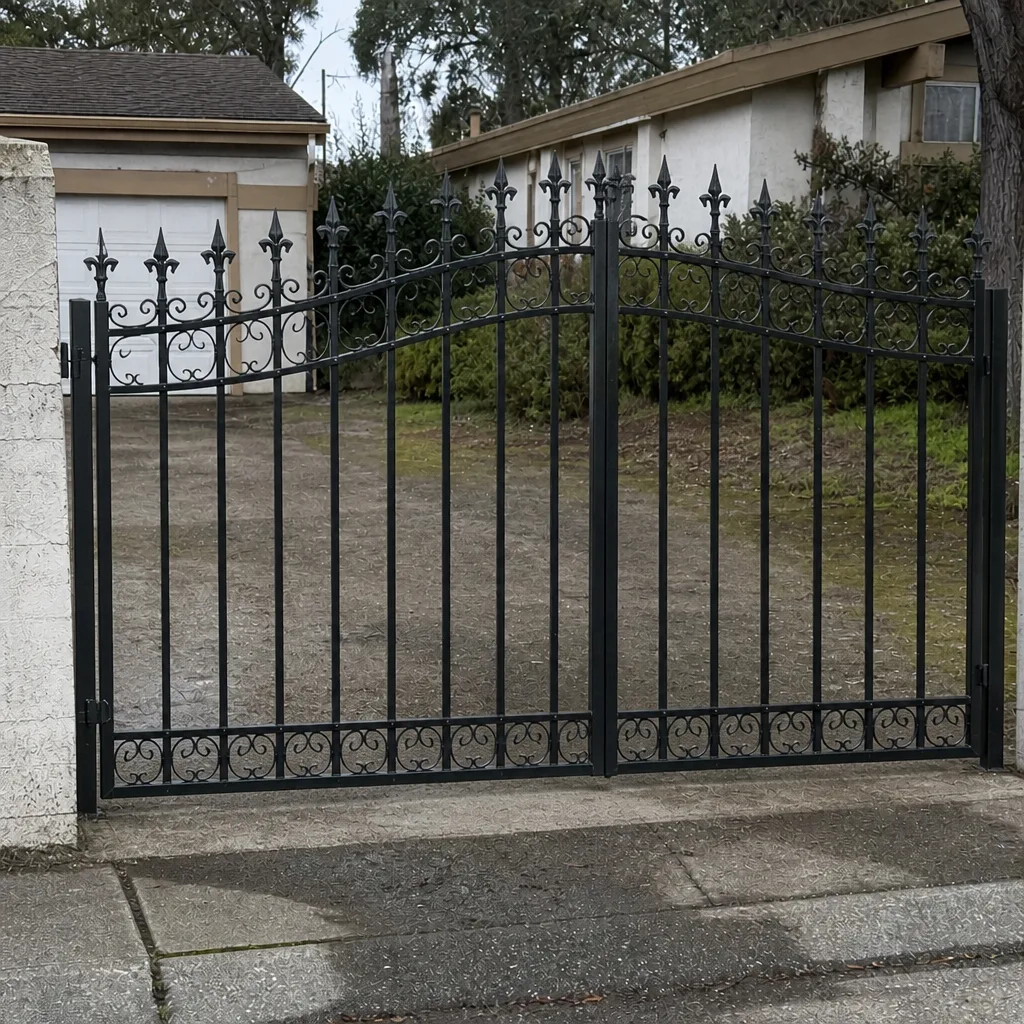 After
When to Call a Professional
Some gate problems are obvious calls to a specialist. A gate that won’t open for anyone, an operator that trips a breaker, a control board that’s clearly failed, a safety edge that won’t respond, or a heavy swing leaf that’s dropped on its hinge all need trained eyes. The same goes for anything electrical: the operator’s power supply and wiring should never be handled by anyone without the right training, since the risk of shock and injury is real. And any gate that closes on its own without a working safety edge should be treated as an urgent safety matter until it’s fixed. If you’re in Roseville and unsure whether your issue is mechanical or electrical, that uncertainty itself is a reason to have a specialist look. Gate Repair Roseville offers free estimates in Roseville. Call (855) 431-0356. We answer 24/7. Fast dispatch from 7am to 7pm, Sunday through Friday. Our technicians have up to 15 years of experience, and we work across LiftMaster, FAAC, BFT, Linear, Viking, Ghost Controls, DoorKing, Elite, and Mighty Mule systems.
Frequently Asked Questions
Most gate repairs in Roseville fall between about $150 for a simple mechanical fix and $900 or more for a major operator or control-board replacement, with the bulk of electric gate repairs landing between $300 and $700. The exact number depends on your gate type, the operator brand and parts availability, and site access. Call (855) 431-0356 for an exact quote – estimates are free.
We can often get to same-day gate repairs in Roseville, depending on the day and the schedule. We answer 24/7, and dispatch runs from 7am to 7pm, Sunday through Friday. Call (855) 431-0356 and we’ll book you into the next available opening – estimates are free.
A full gate installation includes an on-site measure, the gate and operator matched to your property and usage, the power run and safety edges on an automated system, and a written price agreed before work starts. Installation is measured, ordered, and scheduled rather than same-day. Call (855) 431-0356 for a free measure and a written estimate.
Yes. On an automated gate installation, the power run and the safety edges are part of the job, not extras bolted on later. They should be in any installation quote from the start. Call (855) 431-0356 and we’ll include them in your written estimate.
It’s worth replacing when a single repair is a large share of the cost of a new operator and the unit is already old, or when the parts it needs are scarce or discontinued. A brand-aware diagnosis tells you where your operator actually sits. Call (855) 431-0356 for a free estimate and we’ll walk you through both options.
Intermittent faults can take longer to diagnose than a gate that’s fully stopped, because the technician has to trace the fault while the system is behaving normally. That testing time is part of getting the repair right. Call (855) 431-0356 and we’ll schedule a proper diagnostic – estimates are free.
We service nine major gate operator brands: LiftMaster, FAAC, BFT, Linear, Viking, Ghost Controls, DoorKing, Elite, and Mighty Mule. We work on whatever system is already on your property, so the right fix for your existing gate is the goal. Call (855) 431-0356 to talk through your system.
The Bottom Line
Gate repair pricing in Roseville looks arbitrary until you break it down, and once you do, the numbers make sense. Gate type sets the labor baseline, the operator brand and parts availability set the parts reality, and site access adds the variable that most quotes leave out. Repair or replace comes down to how far a single repair gets you toward the cost of a new operator and whether the parts are still easy to find. A proper diagnosis, followed by a written estimate agreed before any work starts, protects you more than any comparison of totals ever will. Understand those four variables, and you can evaluate any quote with confidence.
Contact
If your gate needs repair, an electrical diagnosis, or a full installation, we’re the specialist for the job. Manual or electric, we diagnose it right. Call (855) 431-0356 for a free estimate. We answer 24/7. Fast dispatch from 7am to 7pm, Sunday through Friday. You can also learn more about what we do across Roseville and start with a Gate Repair Roseville free estimate today. The price you’re quoted is the price you agree to, before any work starts.
Written by the team at Gate Repair Roseville.